


Kids Wall Mural Ideas by Theme
The themes that work as kids wall murals are the ones built around a whole scene rather than a single repeated object.
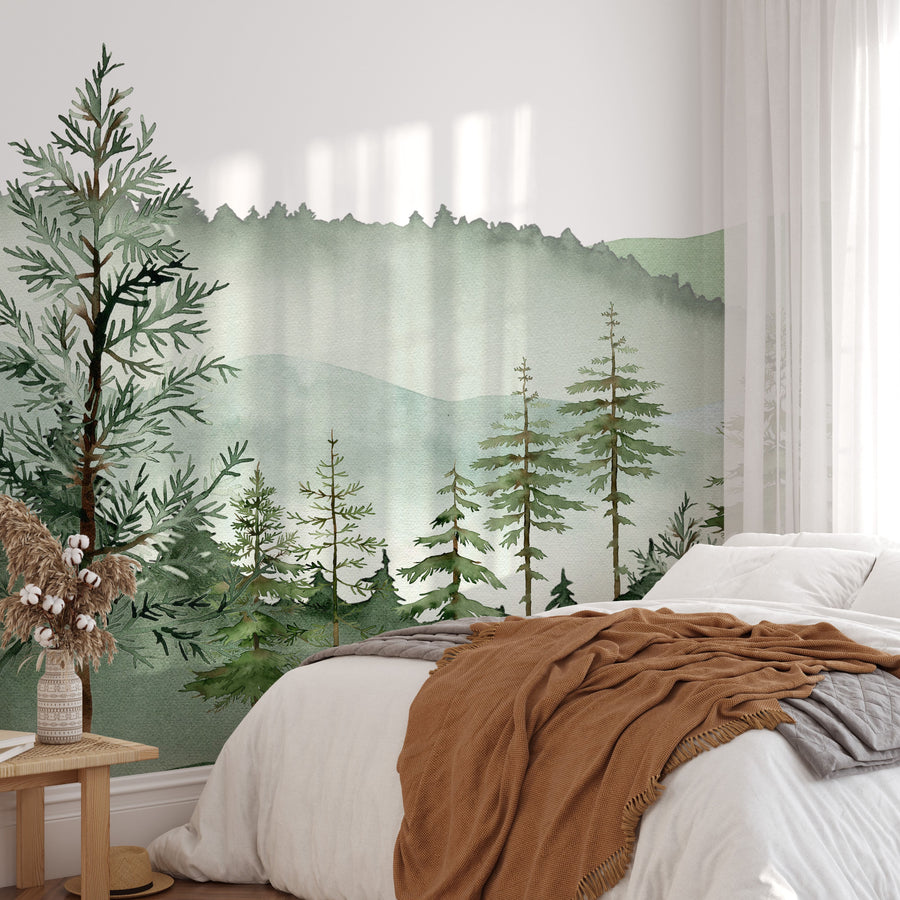
Woodland and forest. Trees, hills, and animals such as foxes, deer, bears, and owls form a continuous landscape across the wall. Neutral, sage, and muted palettes keep the scene visually quiet next to nursery or bedroom furniture.
Dinosaurs. A dinosaur wall mural shows a continuous prehistoric landscape or scene, while a repeating dinosaur print carries individual dinosaurs across the wall as a motif. Both are in our range; the repeat versions live in the dinosaur wallpaper collection.
Safari and jungle. These run from soft, neutral animal scenes to denser compositions with tropical foliage, giraffes, elephants, zebras, and lions. How much color and detail a design carries depends on the artwork rather than the theme. The animal wallpaper collection has more animal designs.
Space and sky. Space wall murals range from dark night skies with planets and rockets to pale clouds and softer celestial artwork. Check where the main elements fall in relation to the bed, crib, or shelving before you choose.
Maps and adventure. World maps, aviator and explorer scenes, and construction-vehicle designs add geographic, transportation, or exploration detail across the wall.
Storybook, unicorns, and travel. Windmill villages, castles, rainbows, and hot air balloons, drawn in an illustrated rather than photographic style.
Kids Wall Murals for Bedrooms, Nurseries & Playrooms
Where the mural goes changes which scene makes sense.
In a bedroom, decide whether you want the mural tied to a current interest or prefer a broader landscape, animal, map, or nature scene. The wall behind the bed is one common choice, as long as enough of the composition stays visible above the headboard; a low bed leaves more of the scene in view than a tall one.
In a nursery, many parents choose softer or lower-contrast palettes, though composition matters as much as color. Keep the main characters above crib height so a dresser, shelf, or changing table doesn't cover them, and check where the key artwork falls before ordering. Our nursery wallpaper collection covers repeating prints and broader nursery options.
In a playroom, you can use more detailed or colorful scenes without needing the mural to feel restful. Maps, animals, dinosaurs, and space scenes also give children more to look at up close. The playroom wallpaper collection has repeating-pattern alternatives.
How to Choose the Right Wall for a Kids Mural
A mural is one continuous composition intended to read across a wall, so the dimensions and layout of that wall matter.
Start with the largest uninterrupted wall. Doors, windows, closets, and radiators cut a continuous scene into pieces, which a repeat handles and a mural doesn't. The wall behind the bed or crib, or the one you see walking in, is often the simplest wall to start with.
Then map the furniture before you order. A crib, a tall dresser, a bookcase, or a shelf sits in front of the lower third of the wall and can hide the part of the scene you bought it for — the fox, the rocket, the horizon, the focal character. Mark the height of that furniture on the wall and check where the mural's focal elements will land above it.
Measure the full wall width and height, including the area behind furniture. EazzyWalls offers standard mural sizes, with custom sizing available when the artwork needs to fit a specific wall. Plan on trimming at the edges during installation, since walls are rarely perfectly square.
Manufacturer tip: Before ordering, mark the height of the crib, bed, dresser, or shelving on the wall with painter's tape and stand back. Check where the mural's main characters or focal elements will sit once the furniture is in place.
Kids Wall Mural vs Repeating Kids Wallpaper
Both have a place; they solve different problems.
Repeating wallpaper carries the same motif from panel to panel, so it continues more naturally around doors, windows, corners, and across several walls.
A wall mural is one continuous composition, so wall dimensions and furniture placement matter more, because individual elements of the artwork sit in specific positions. For non-kids murals and grown-up rooms, see the full wall murals collection.
Peel & Stick vs Traditional Kids Wall Murals
Every mural in this collection is available in all of our material options.
Peel and stick is self-adhesive and installs on a smooth, clean, properly painted, fully cured wall. We make it in Smooth Vinyl, with a semi-gloss finish, and Canvas, with a matte woven texture; both are removable. EazzyWalls currently recommends allowing newly painted walls at least eight weeks to cure before installation. See the full peel and stick wallpaper collection.
Traditional Type II is paste-installed and commercial-grade, tolerates slight wall texture that peel and stick does not, and is Class A / Class 1 fire rated (ASTM E84). For a daycare, preschool, pediatric, or other commercial space, Traditional Type II may be appropriate where a commercial-grade wallcovering is required; always confirm the project's own fire, building, and facility requirements before specifying a material. Our commercial Type II wallpaper collection covers those uses.
How to Choose Color and Scale
Scale on a mural isn't about room size the way it is with a repeat. Because a mural is one composition, what matters is the visible wall area, the layout of the artwork, and how far back you usually view it from. A large scene can work in a small room when enough of the wall stays open for the composition to read.
Judge a design from the distance where it will actually be seen, and account for anything that interrupts the wall — windows, doors, or furniture — since those break up a continuous image.
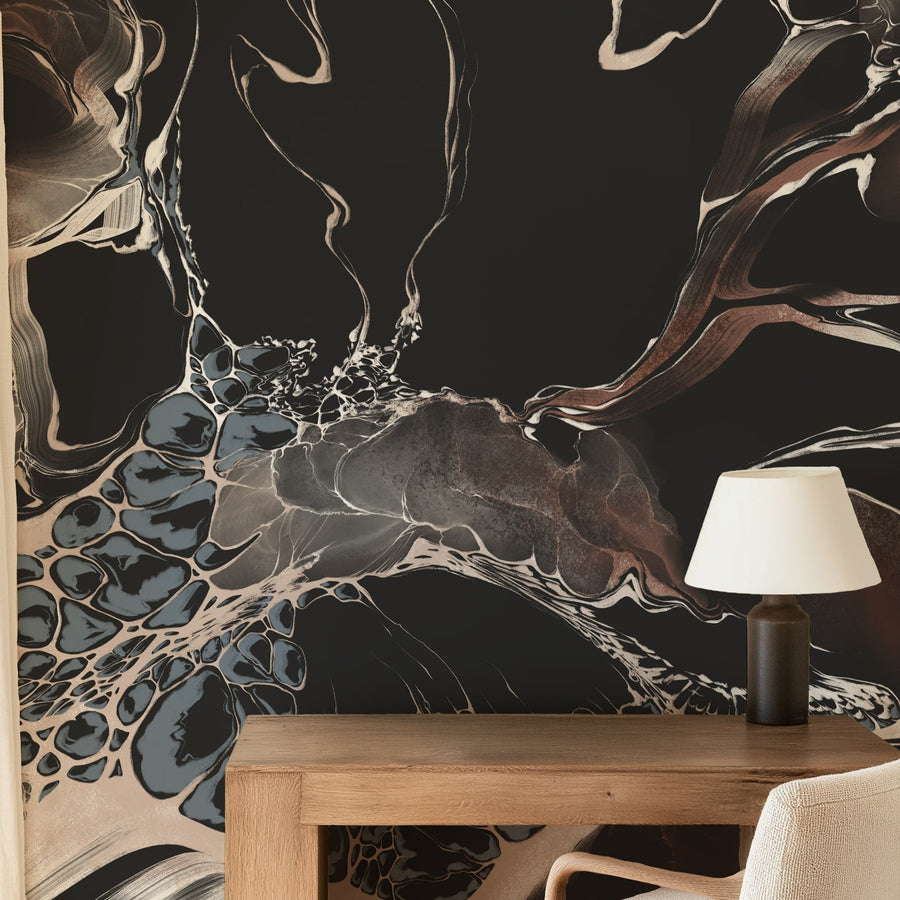
Darker murals carry more visual weight than pale ones, particularly in rooms with limited daylight. Order a sample and check the dominant colors in daylight, in evening light, and against the room's furniture and finishes before you commit.