




Mid-Century Modern Wallpaper Ideas
Mid-century design covers a wide visual range, from sparse two-tone repeats to dense, saturated compositions. These are the pattern families the style is built on.
Atomic & Starburst. Radiating lines, small bursts, scattered points, and molecular forms drawn from 1950s Atomic Age imagery. Motifs are typically small to medium in scale and spaced across the ground, often in two or three colors. This is the most era-specific pattern family — the reference to the period is explicit rather than abstracted.
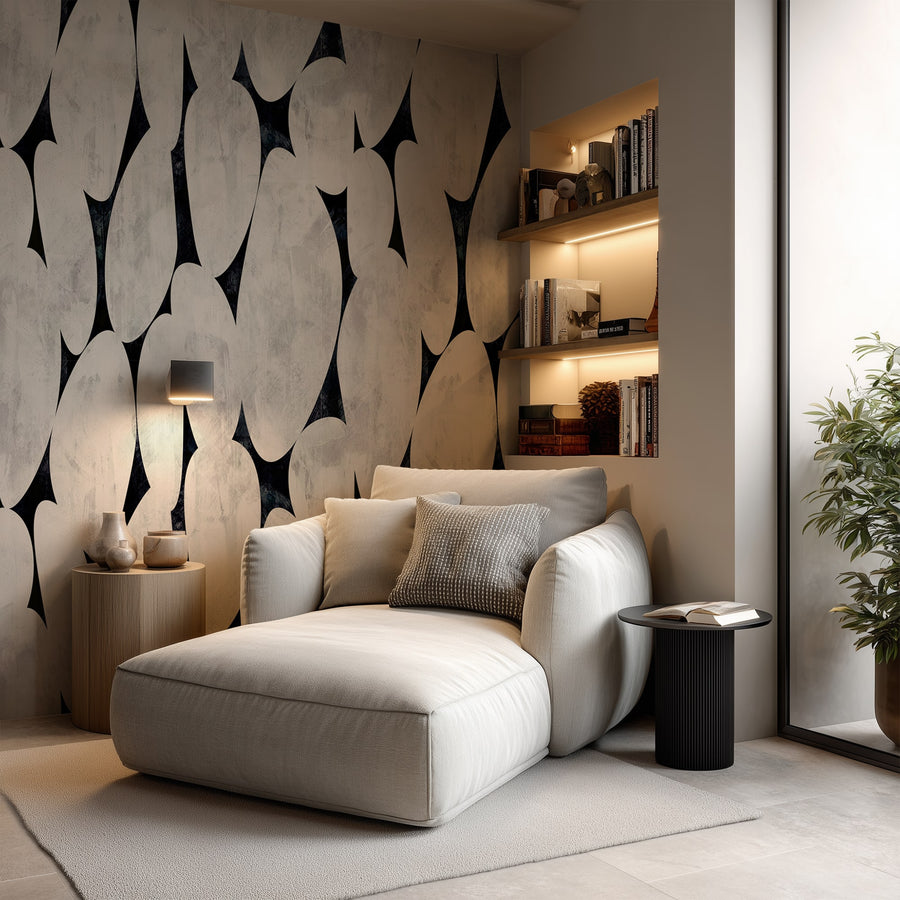
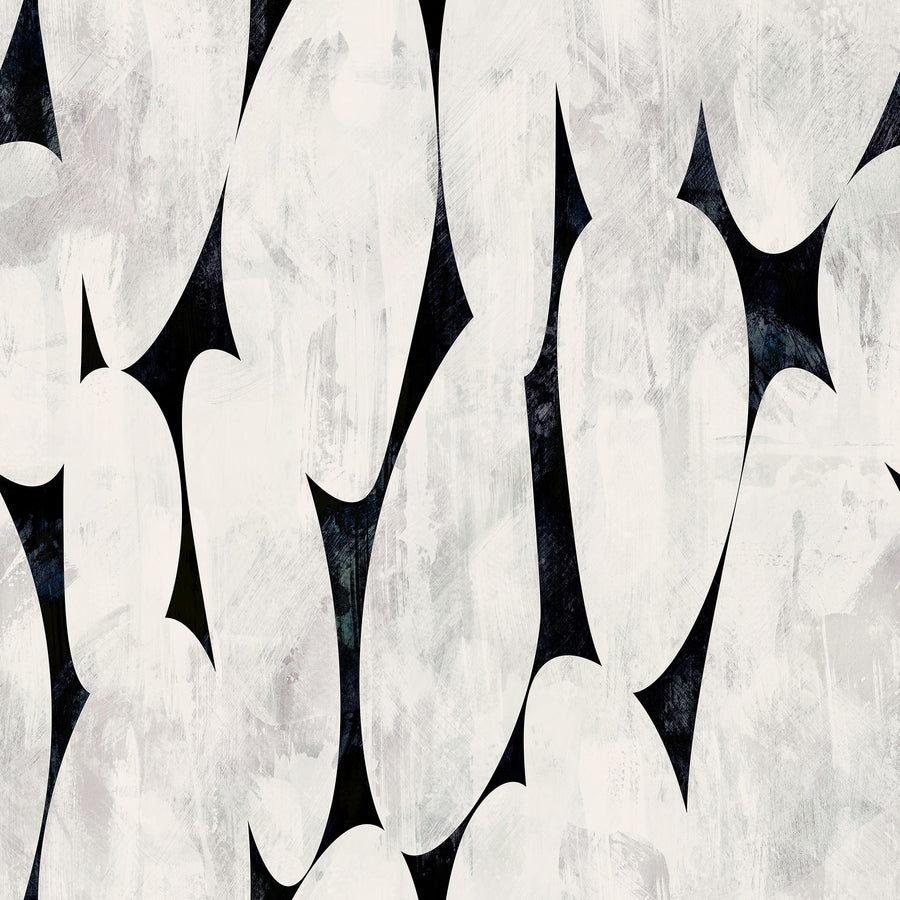
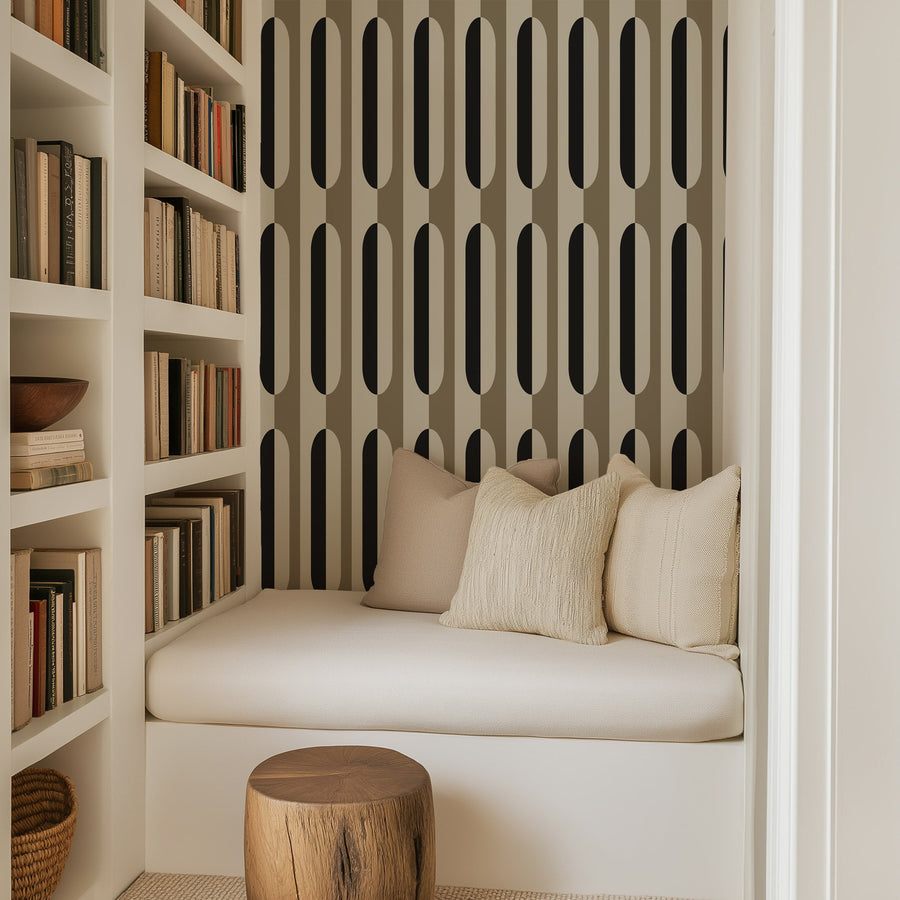
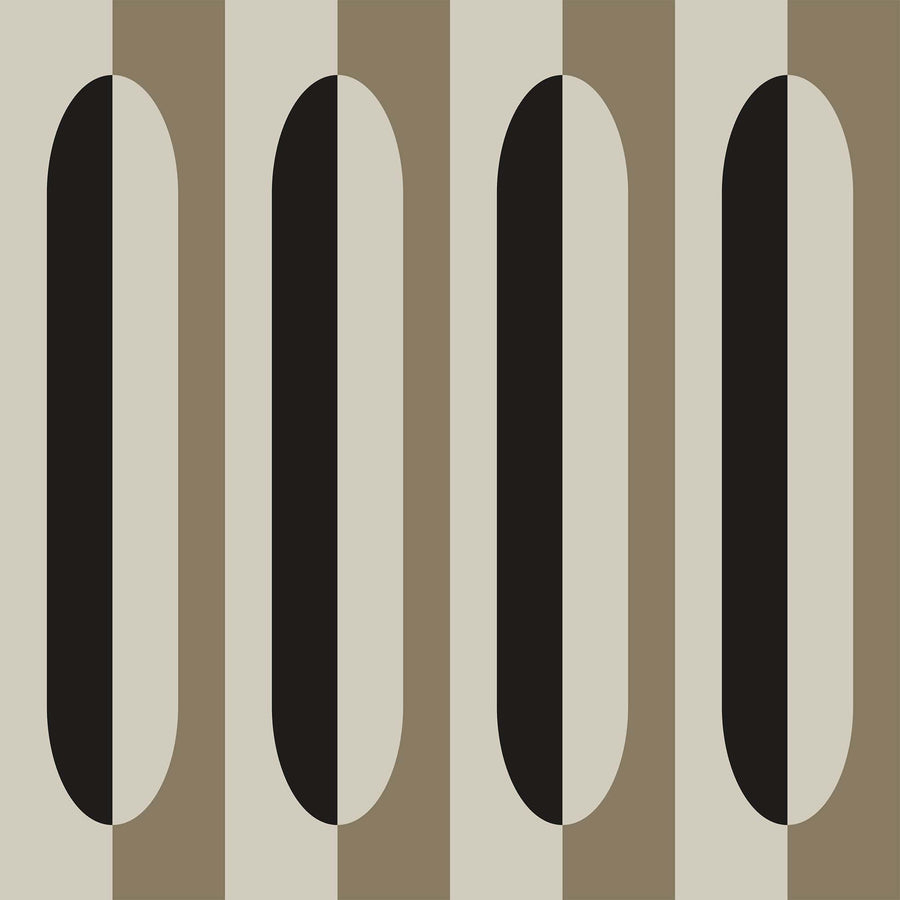
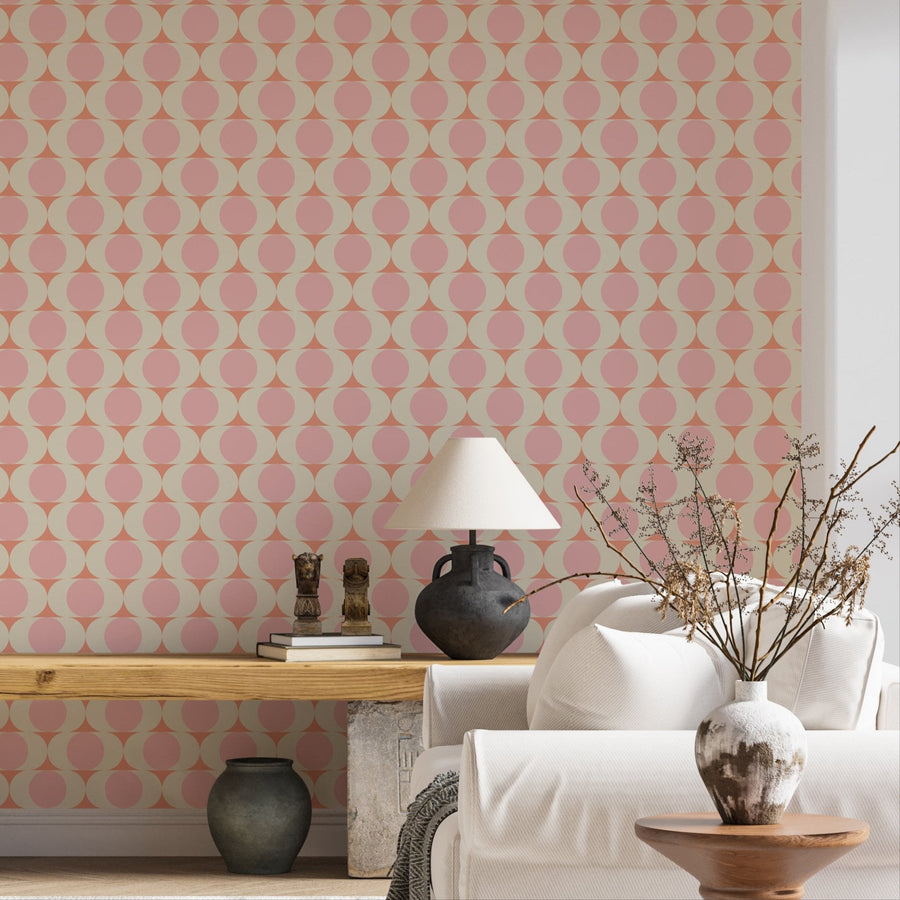
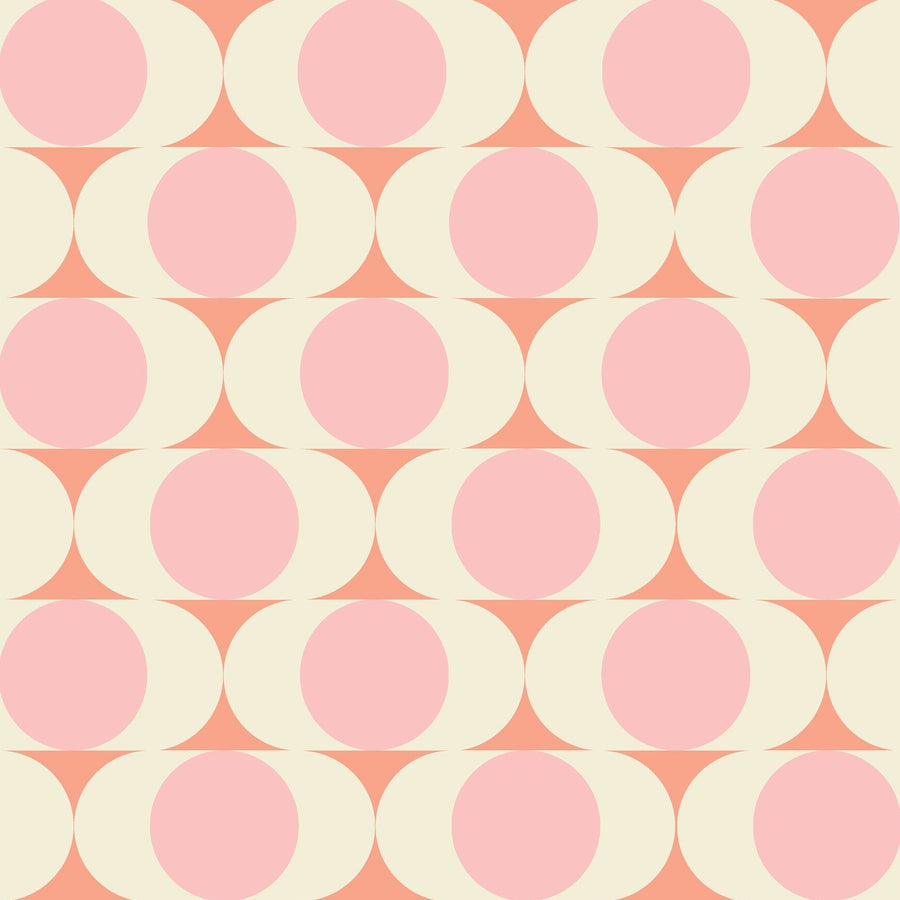
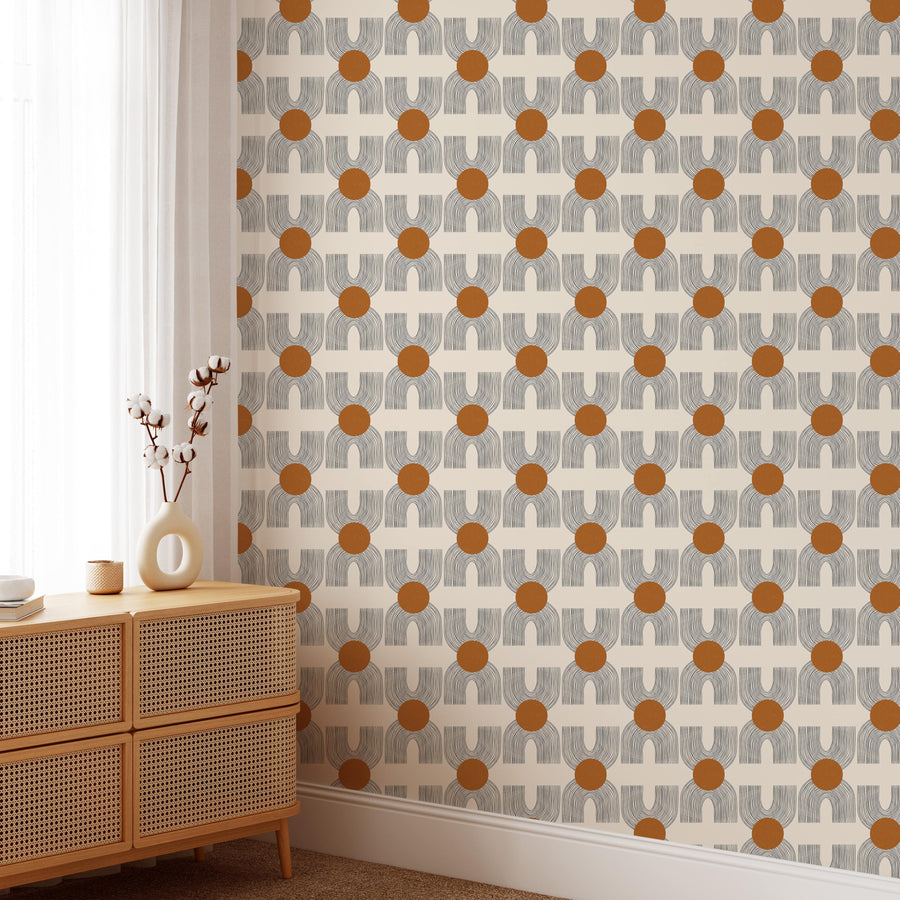
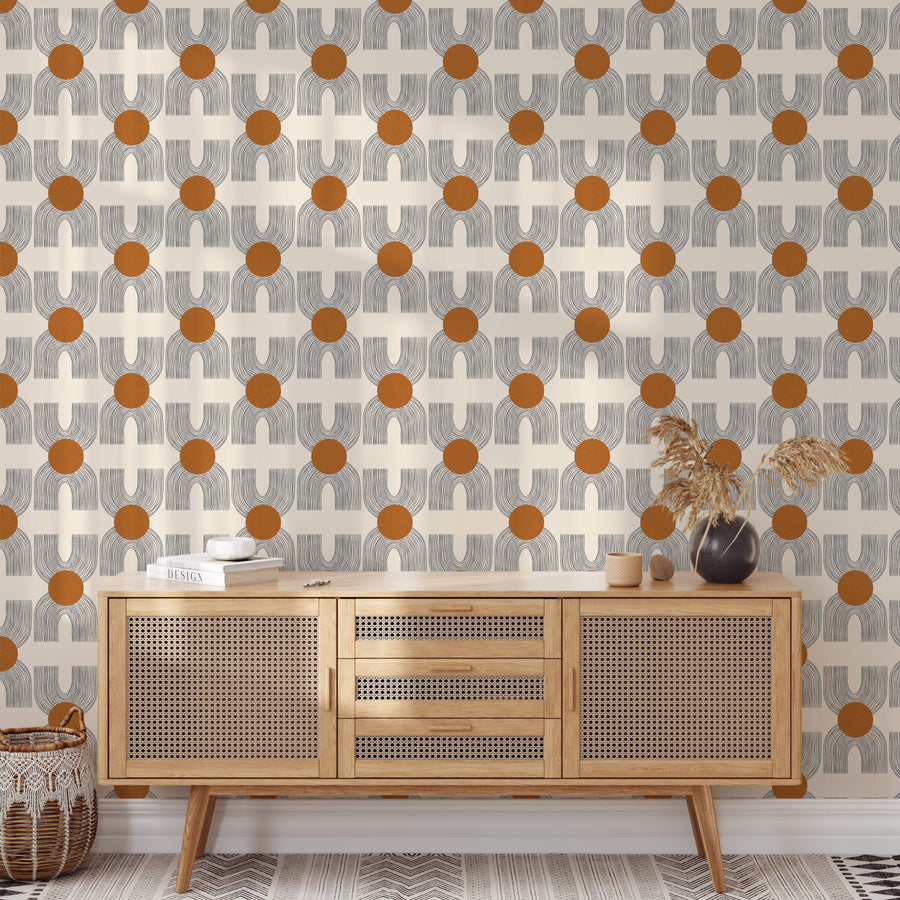
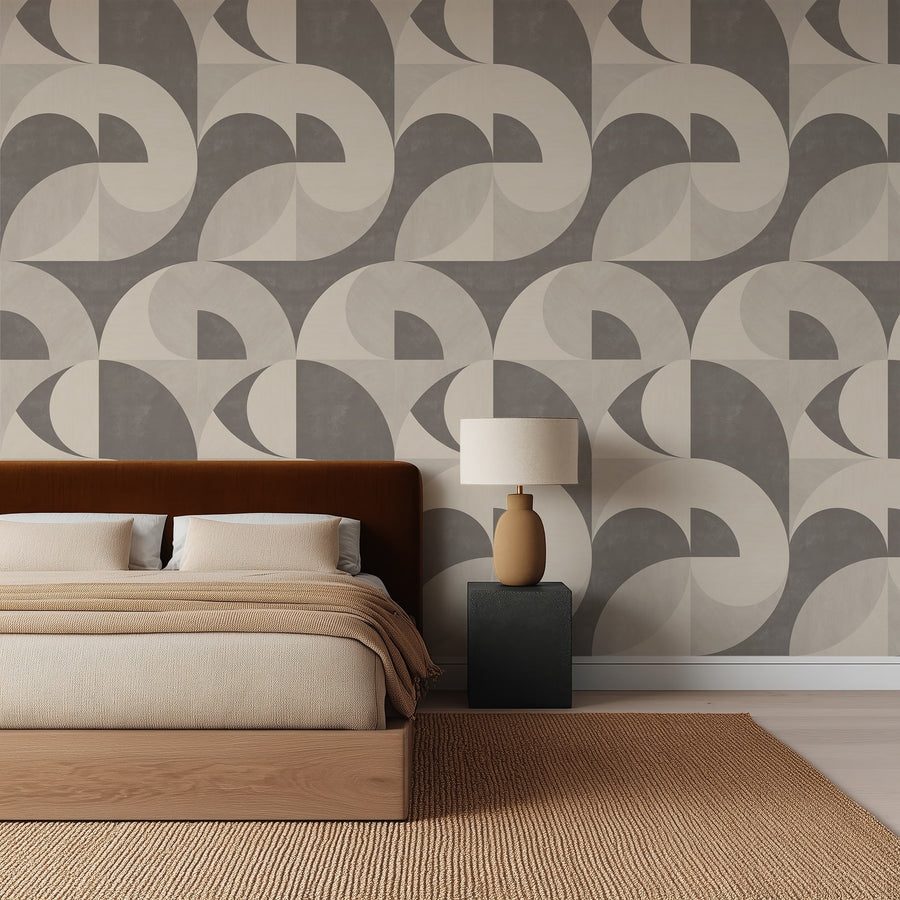
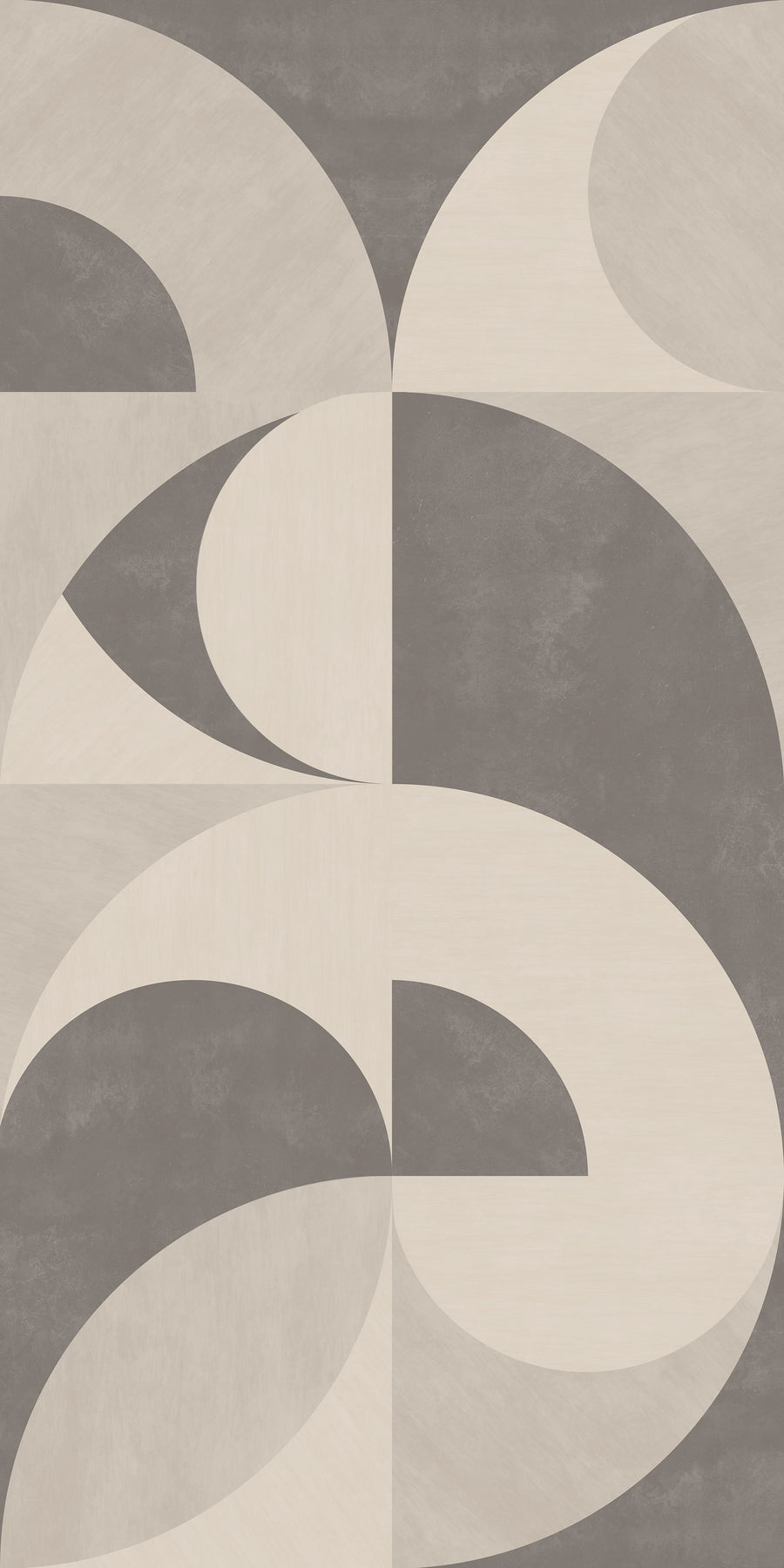
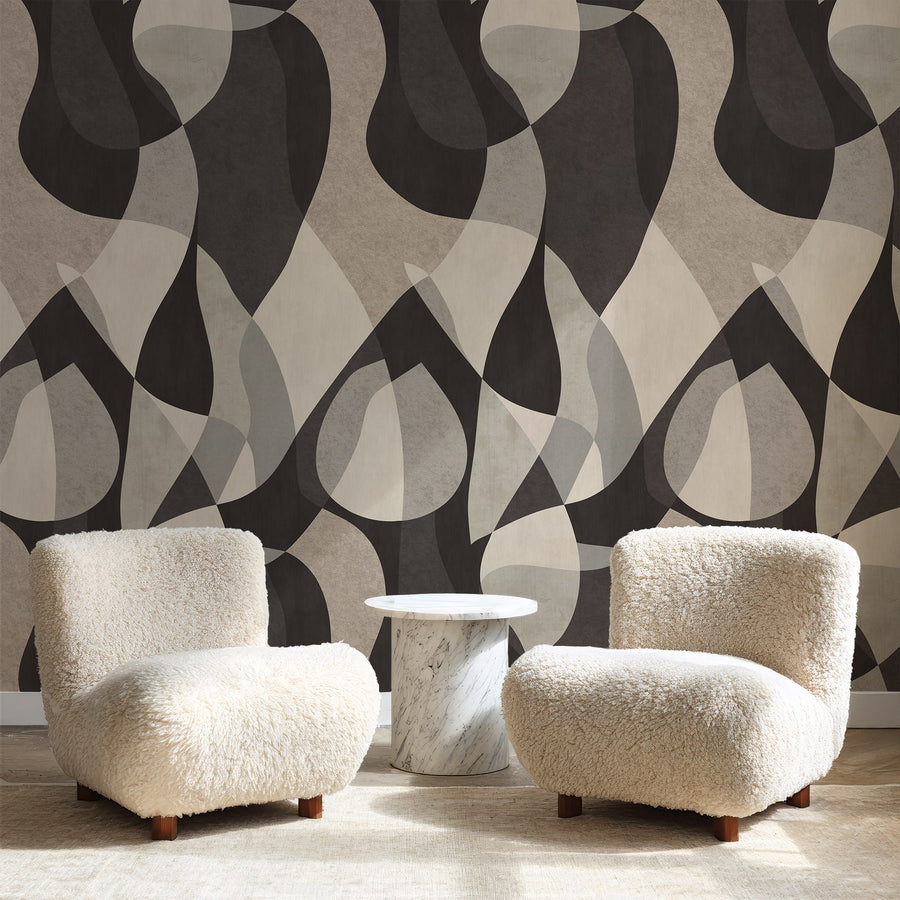
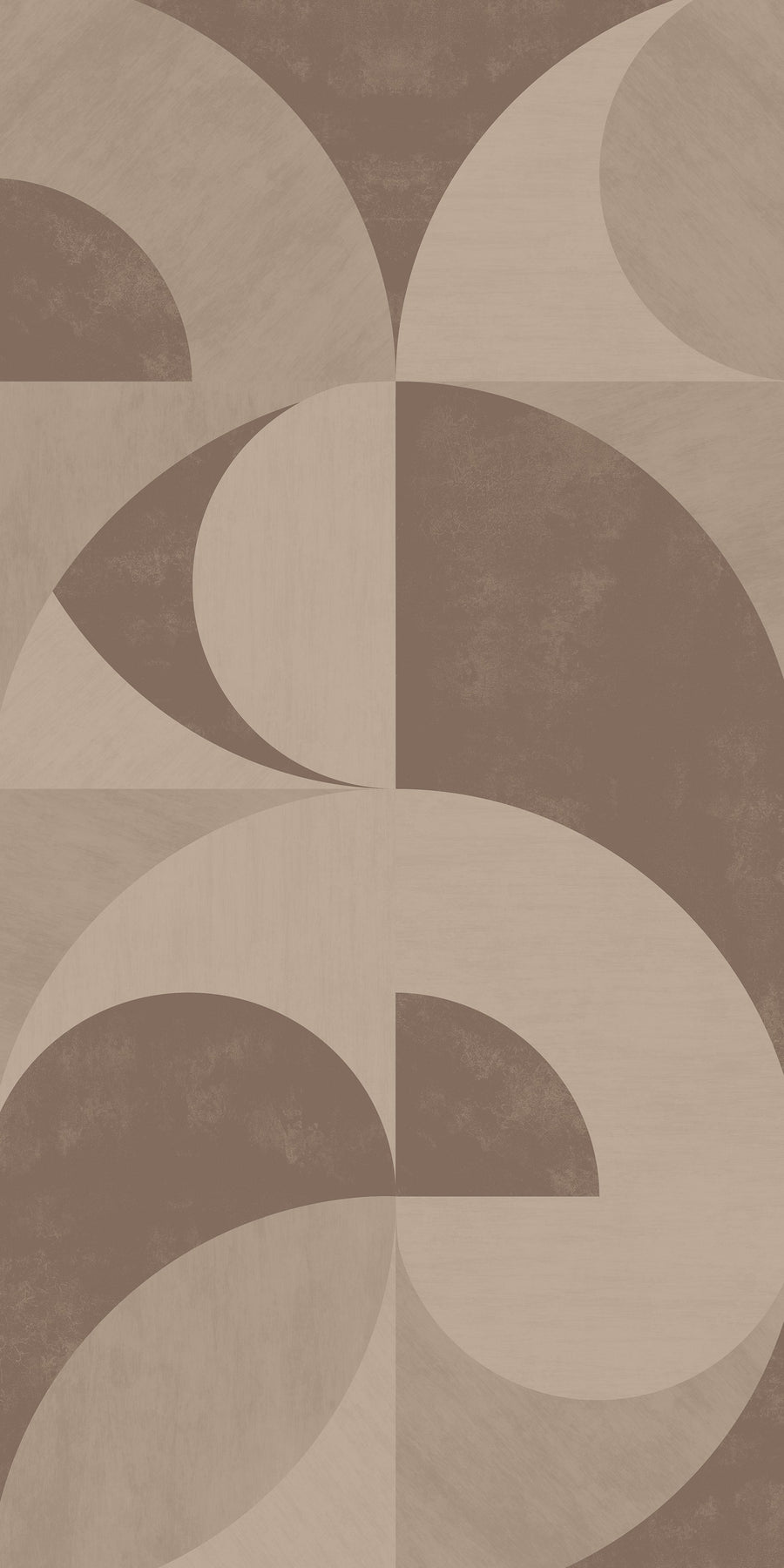
Arches & Curves. Repeating arch forms, semicircles, and sweeping curved lines, usually drawn at a larger scale than atomic motifs. The forms are architectural in origin, echoing mid-century building shapes, and they range from outlined and open to solid and blocked.
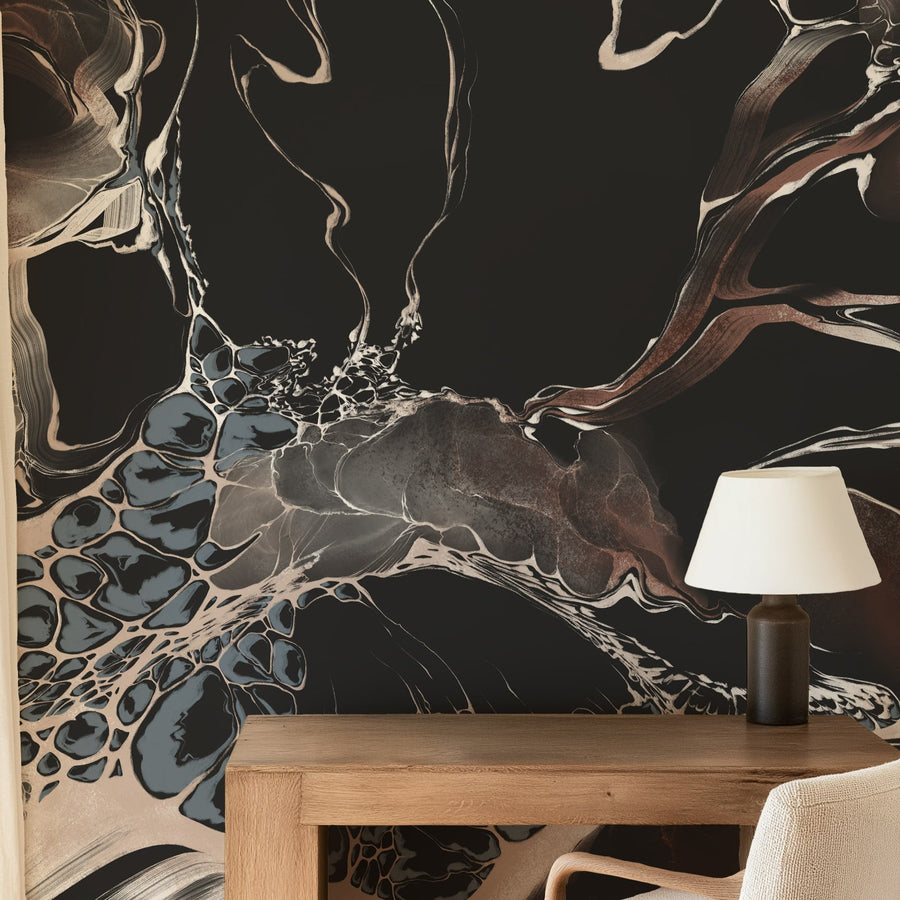
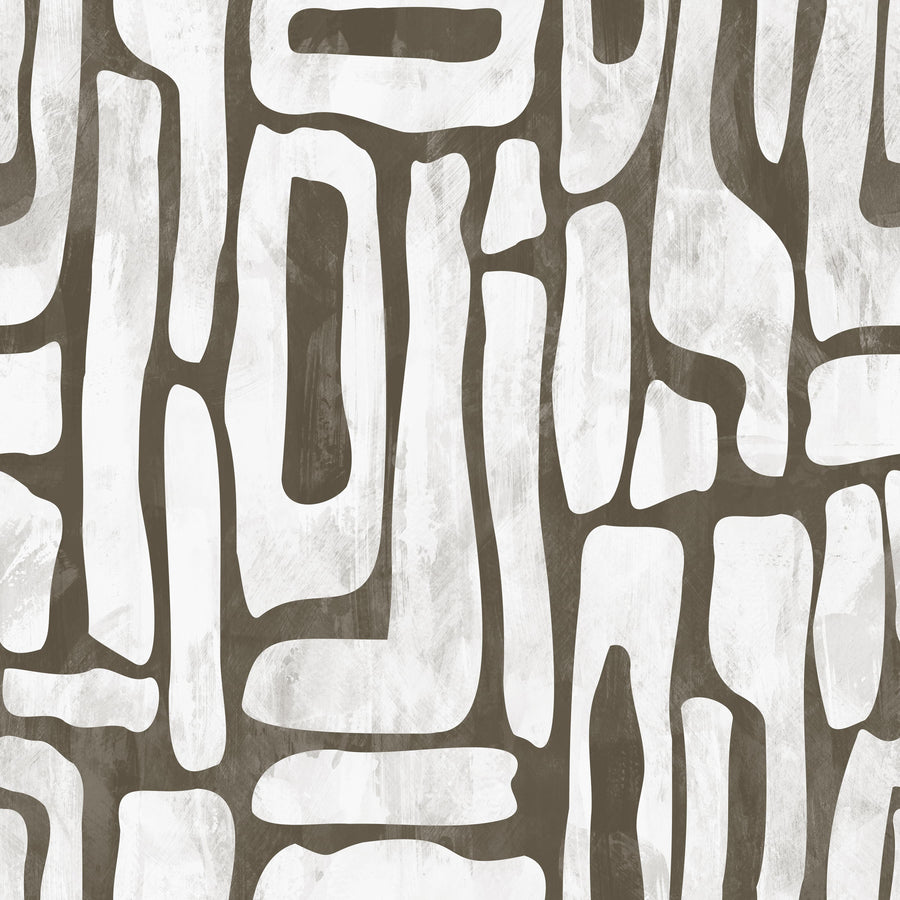
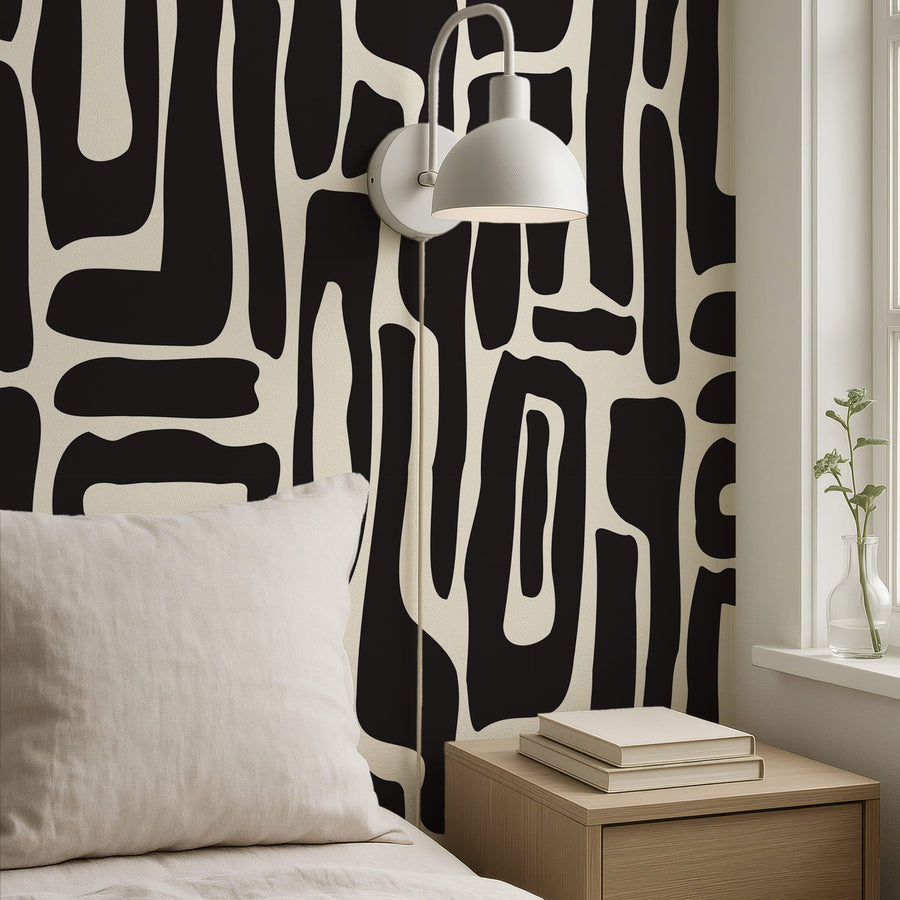
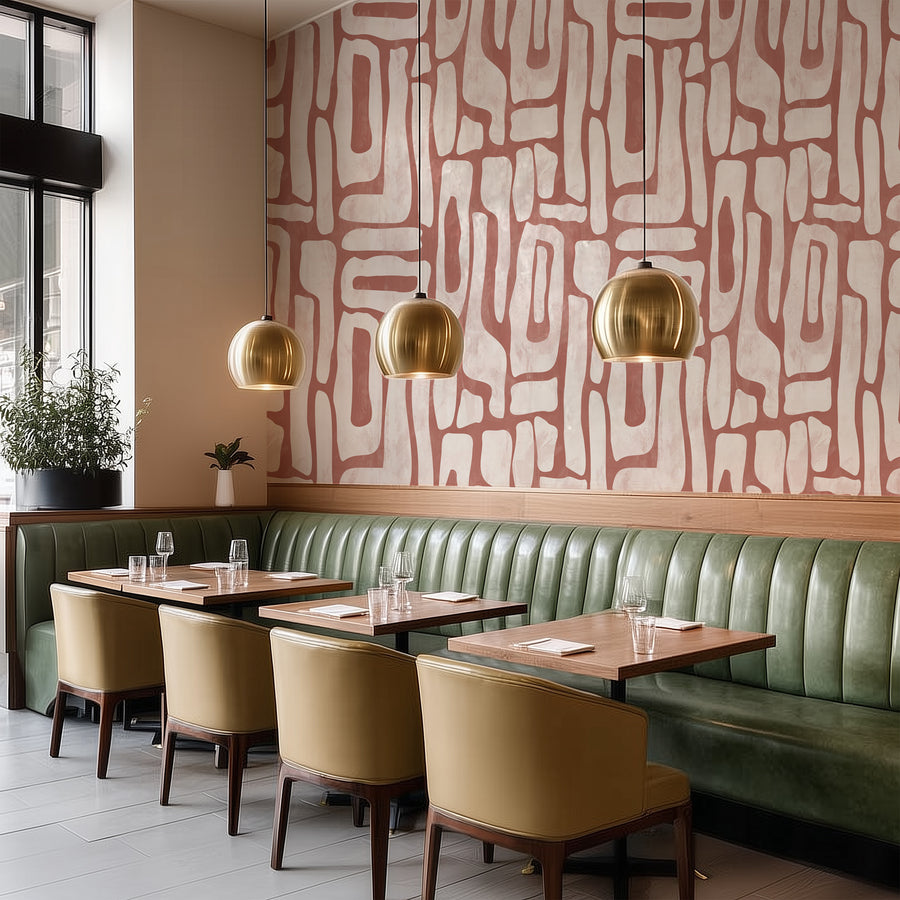
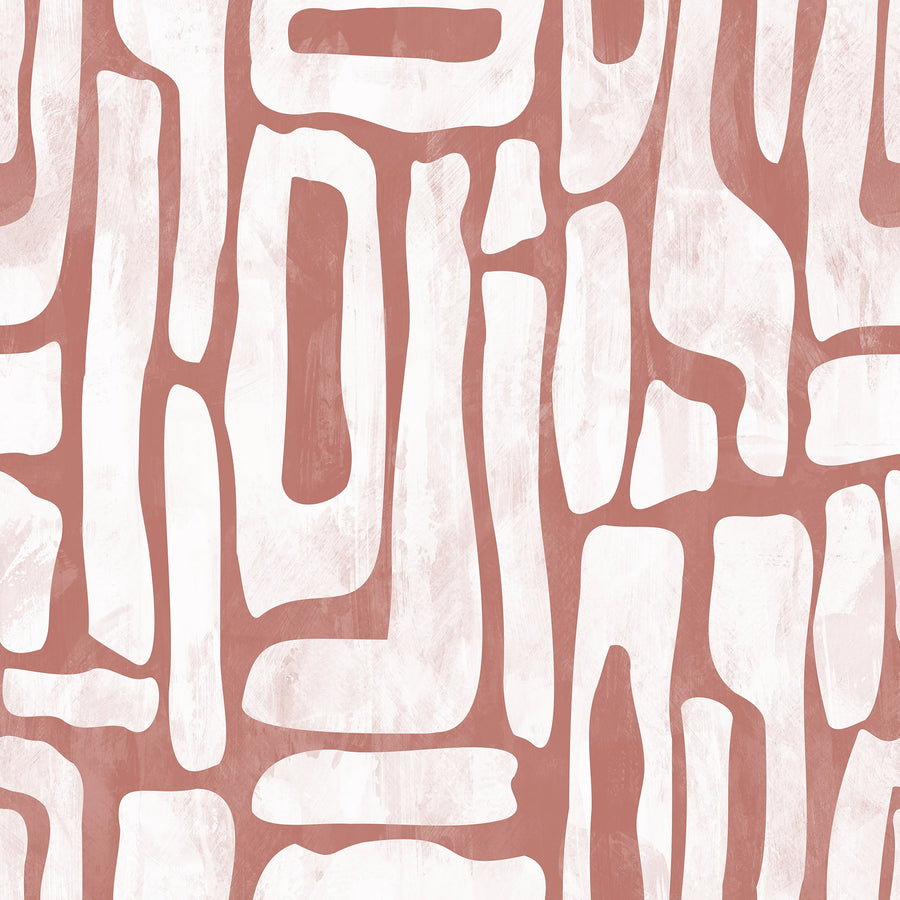
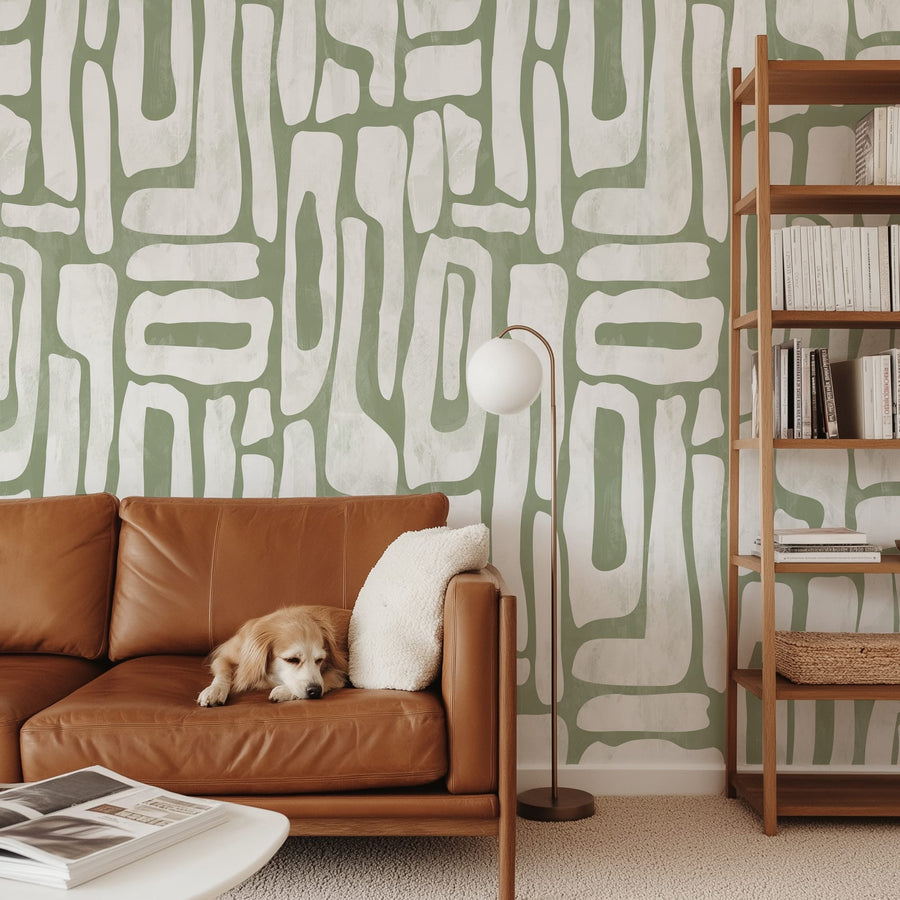
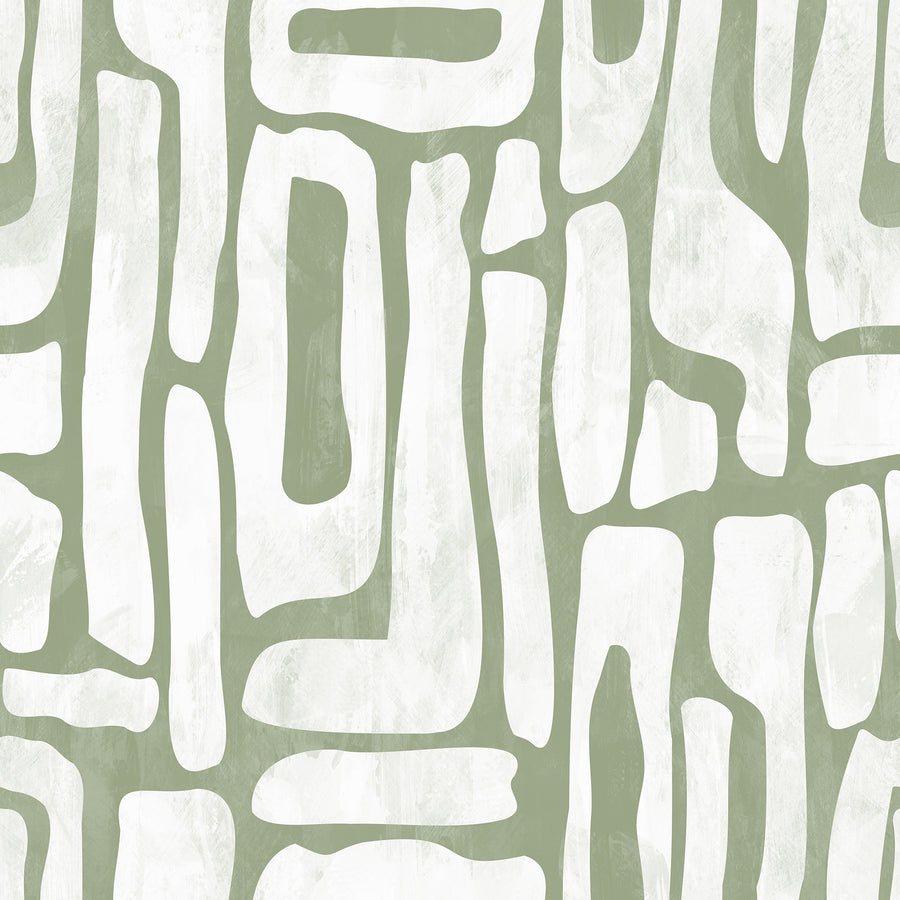
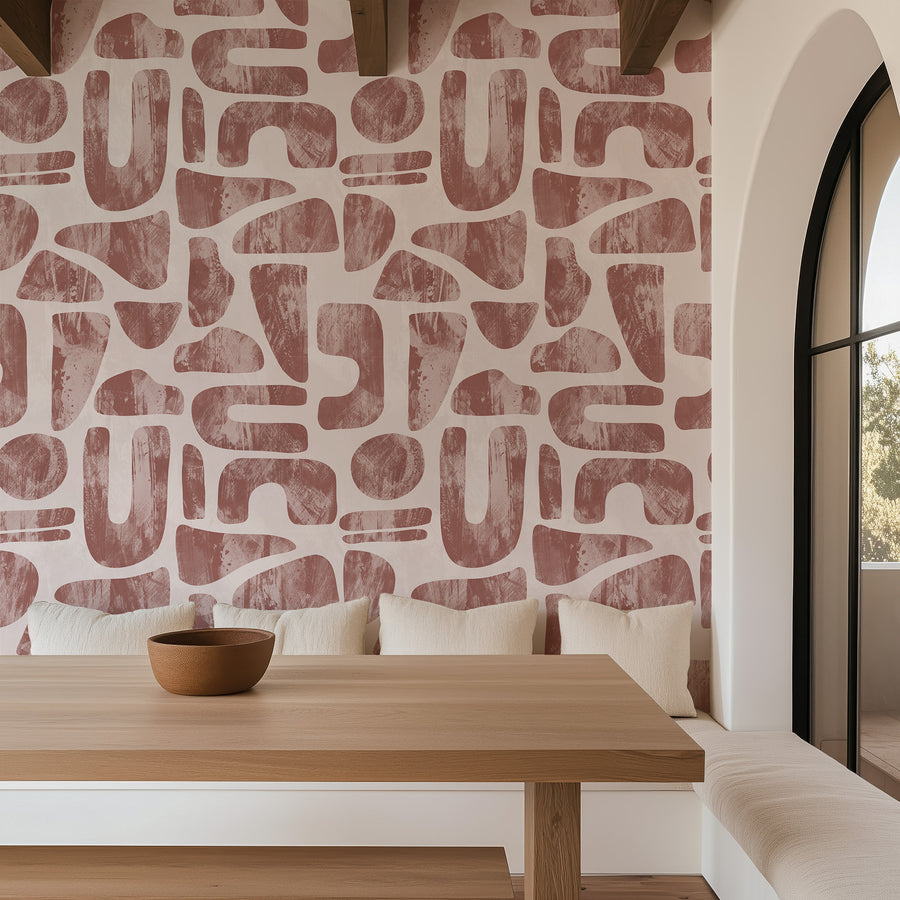
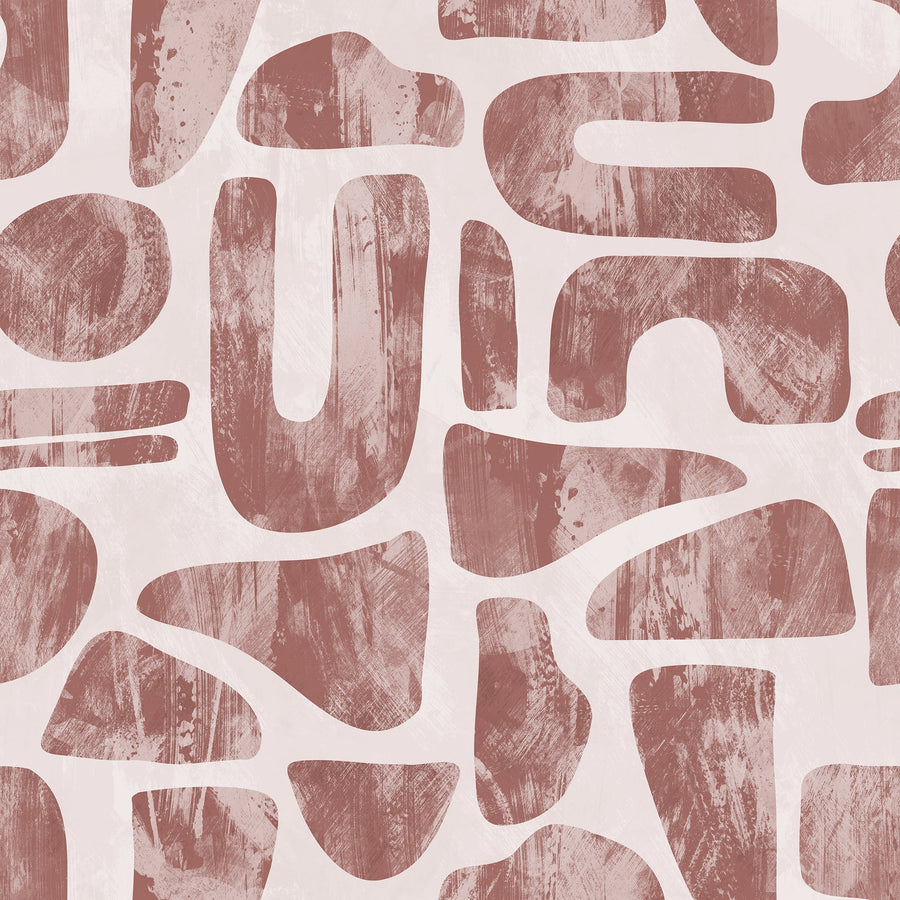
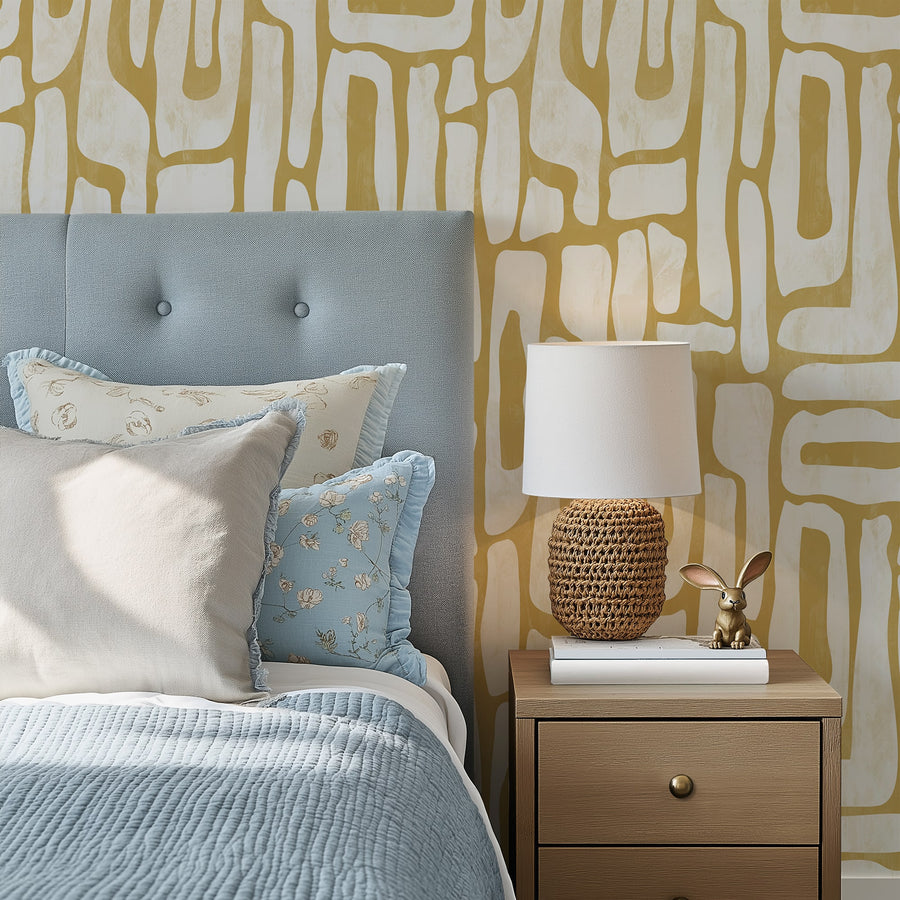
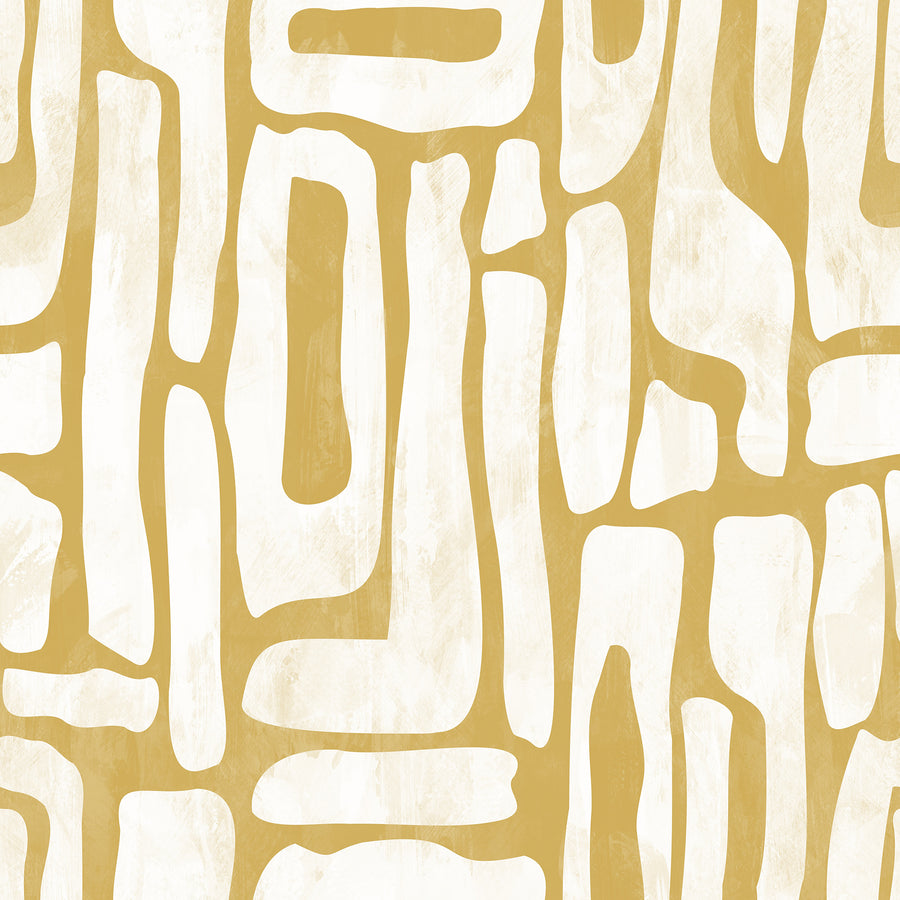
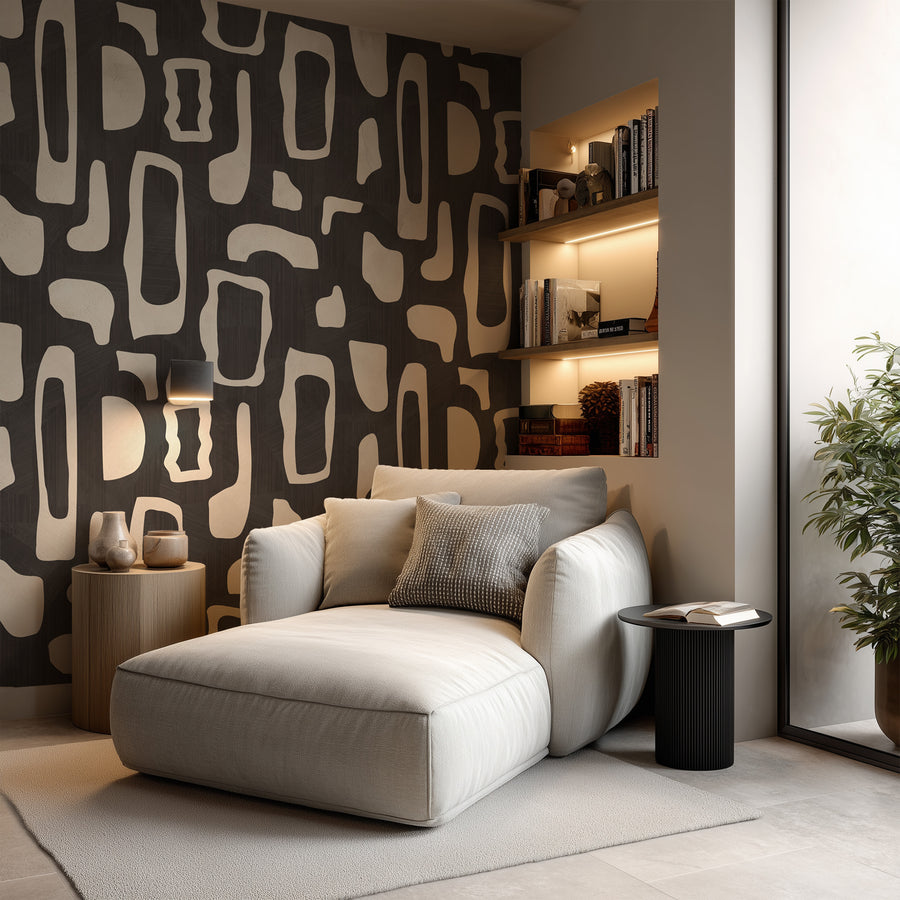
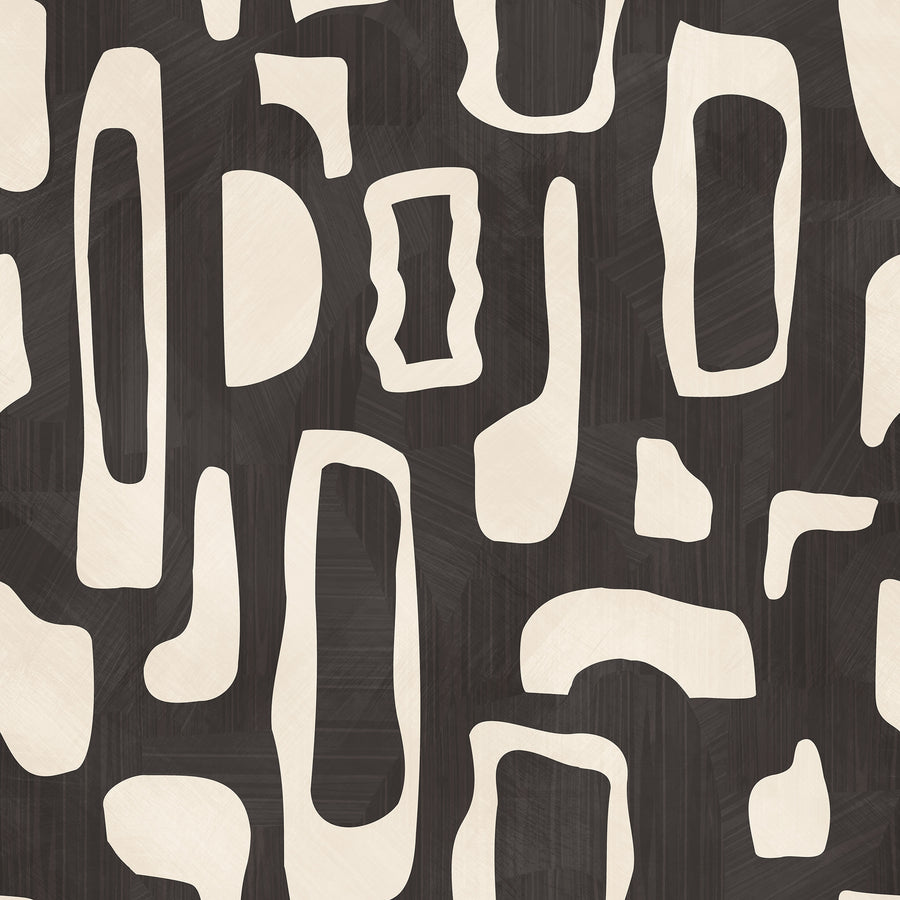
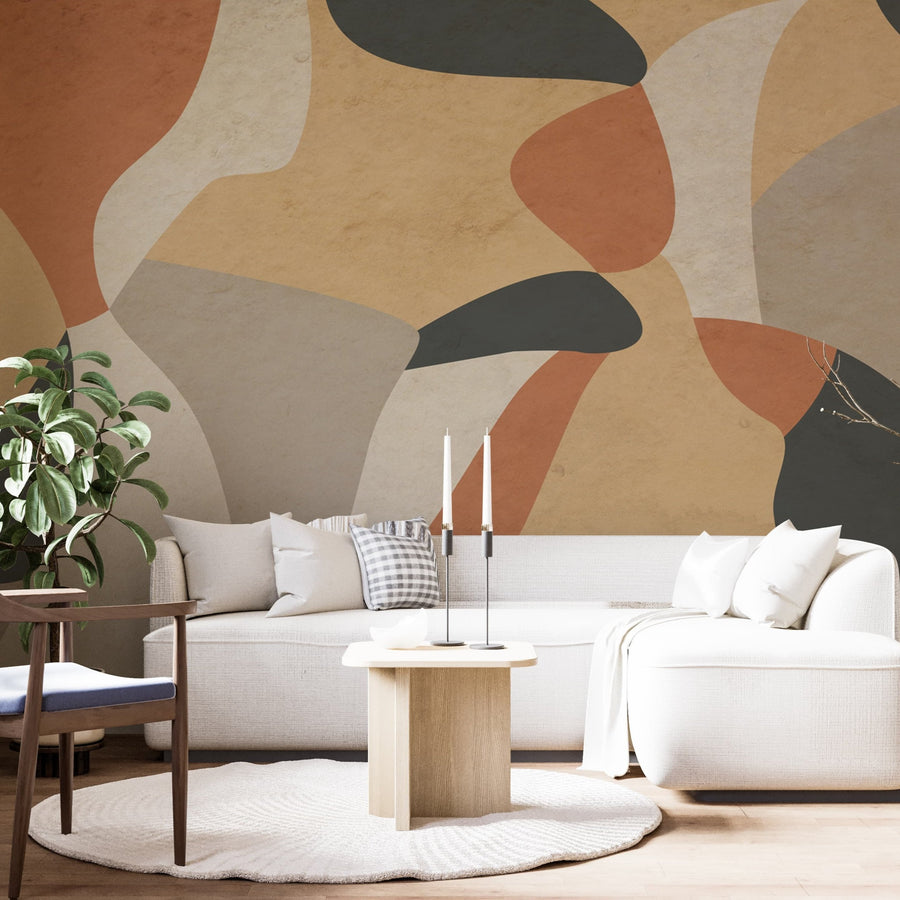
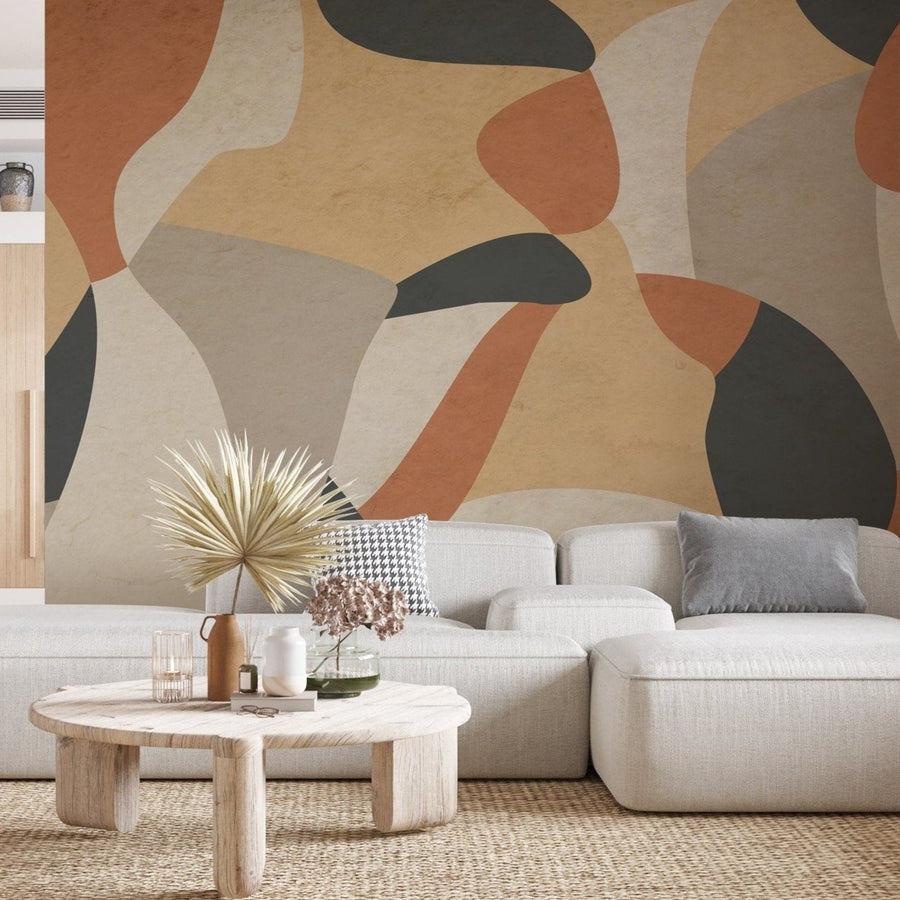
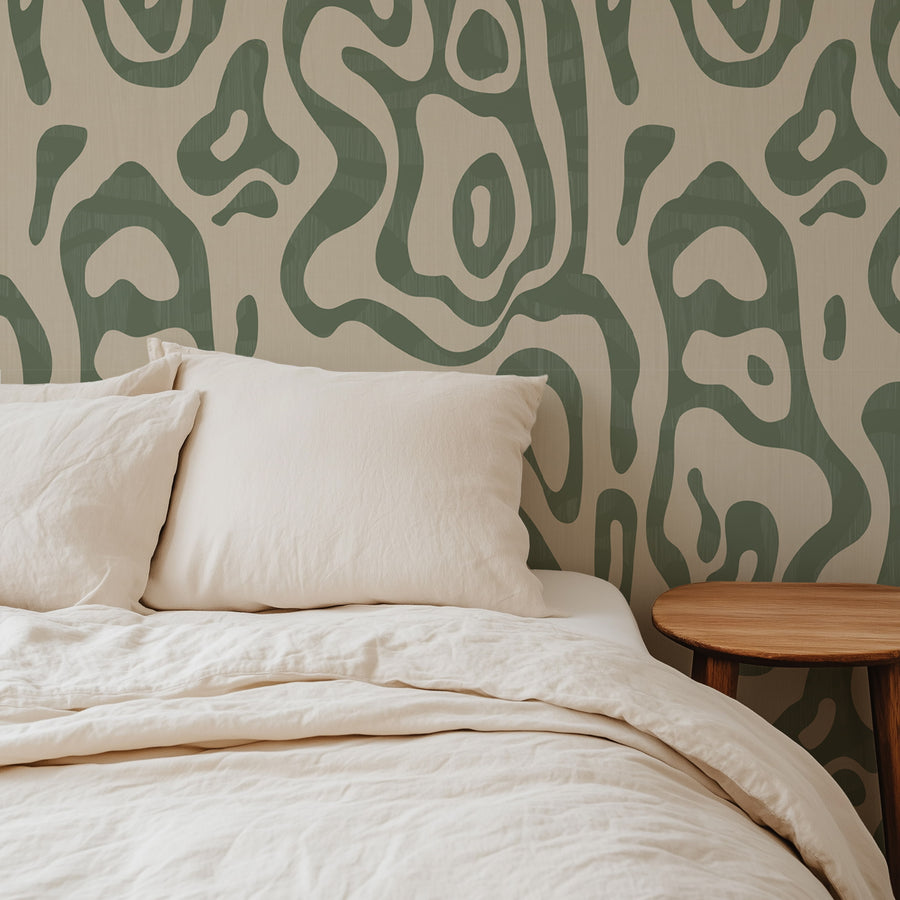
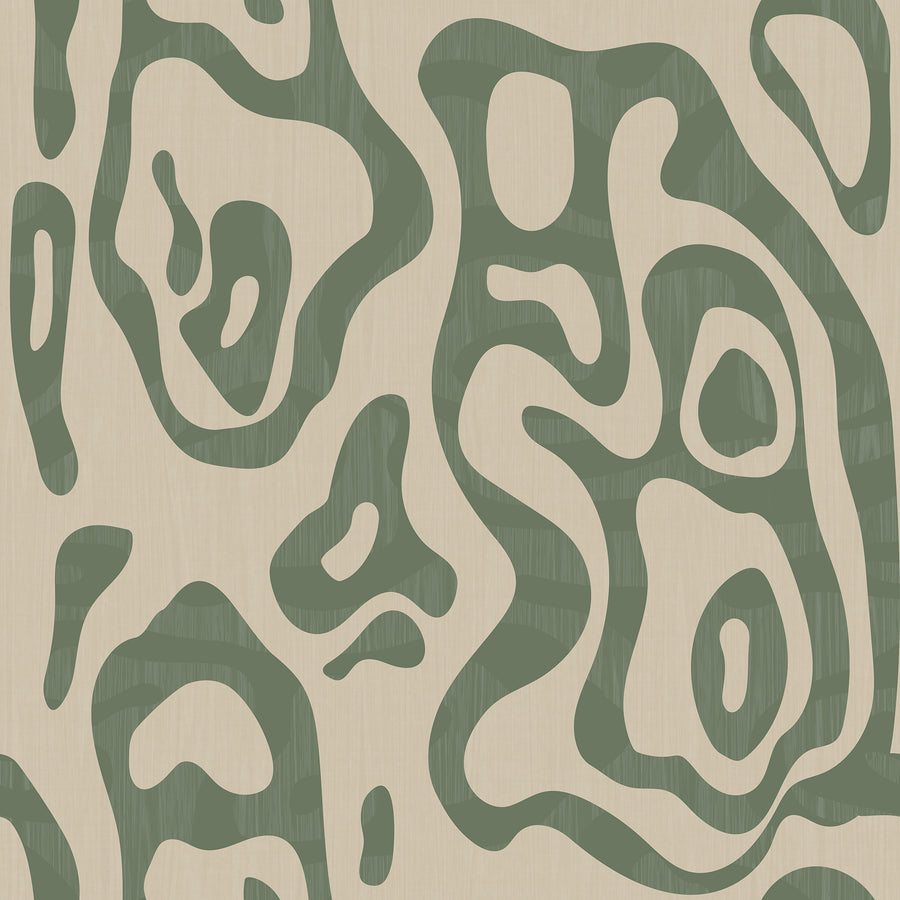
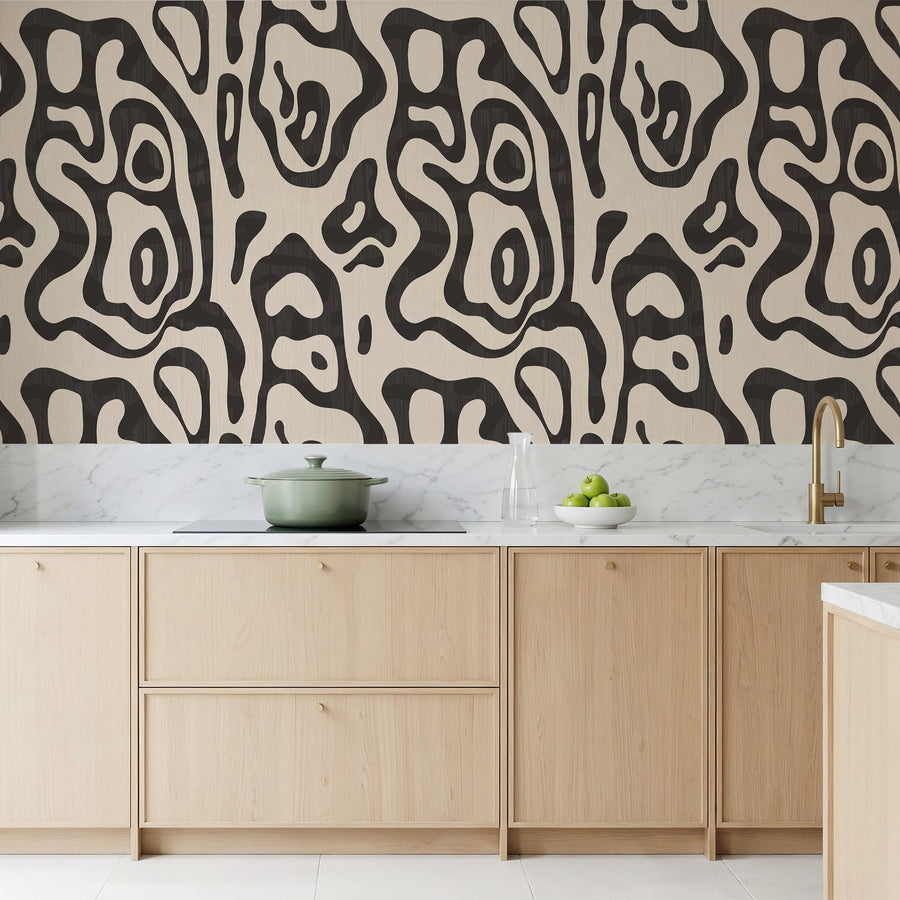
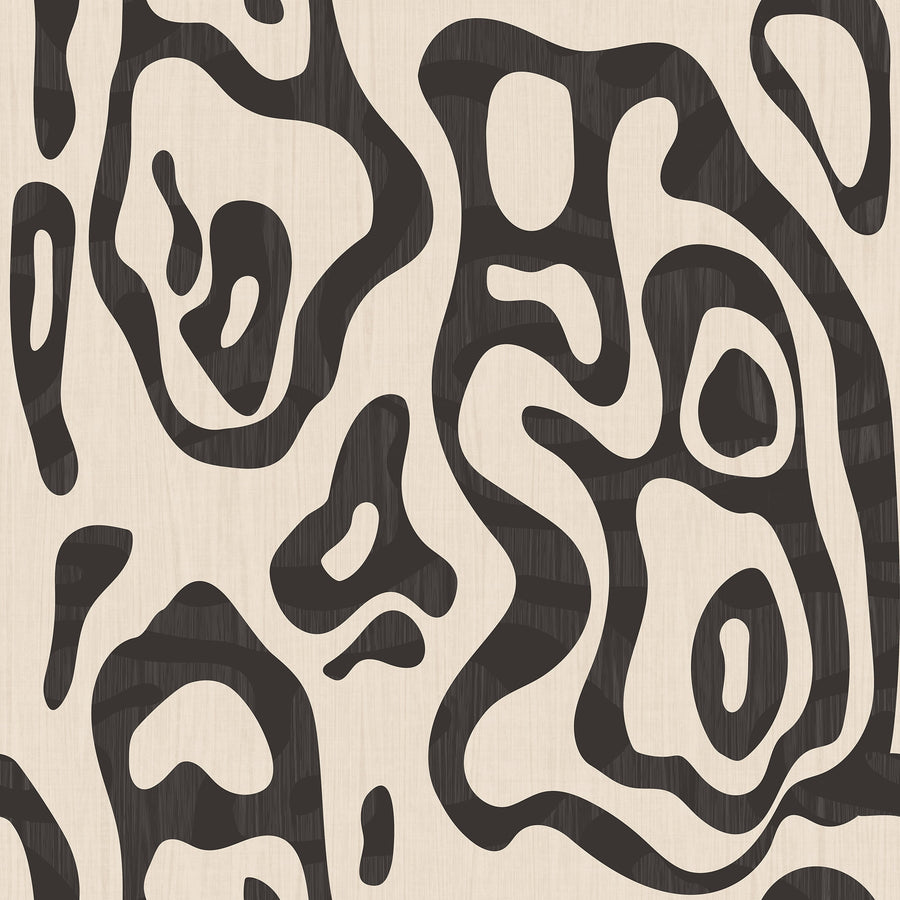
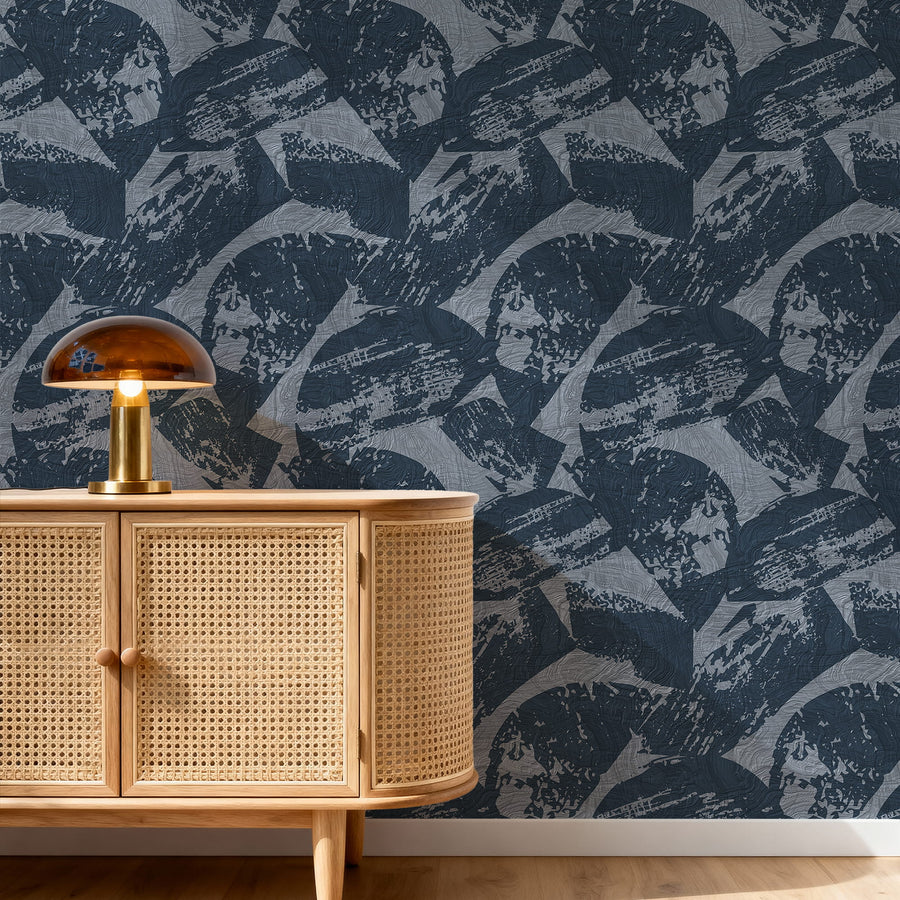
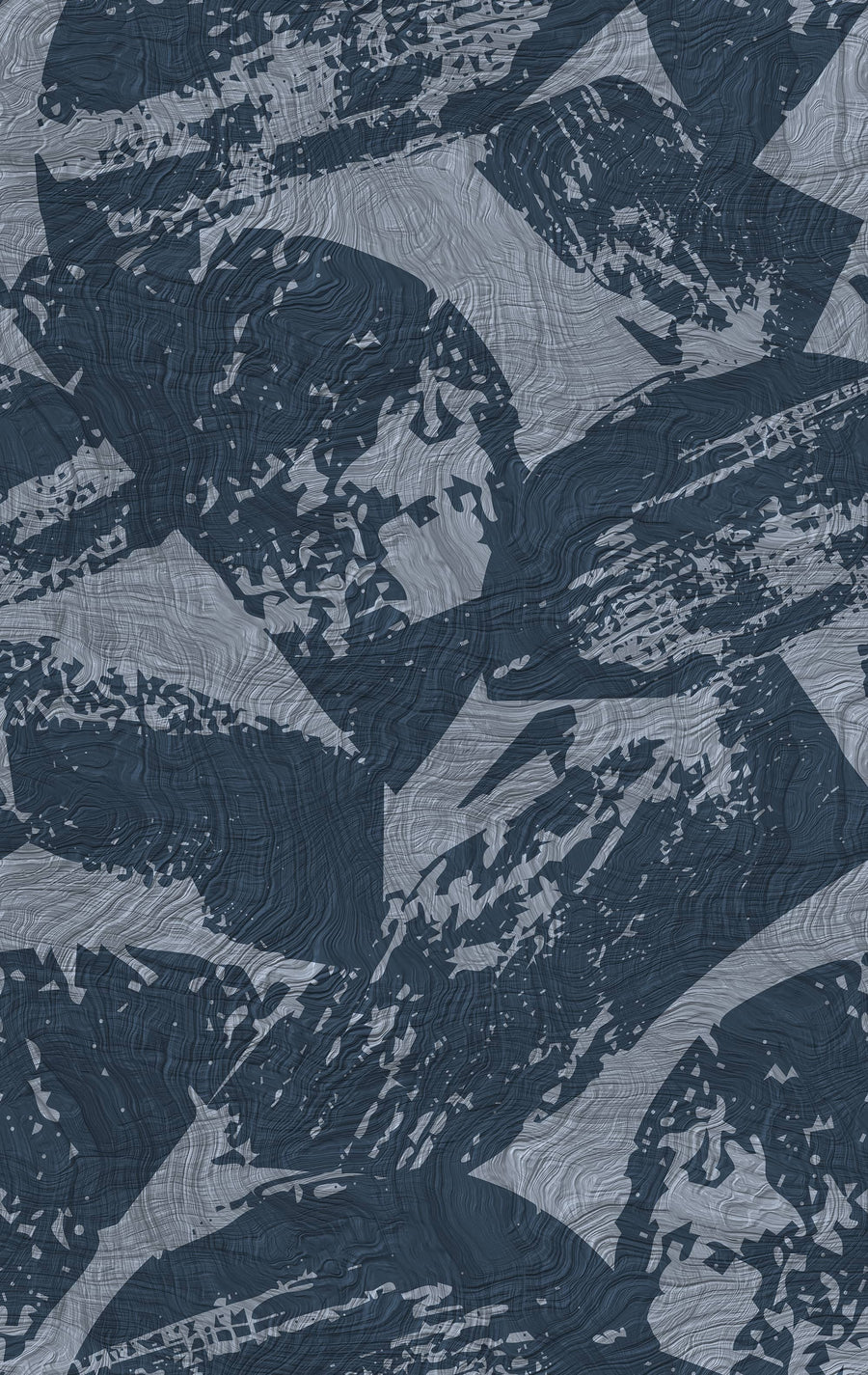
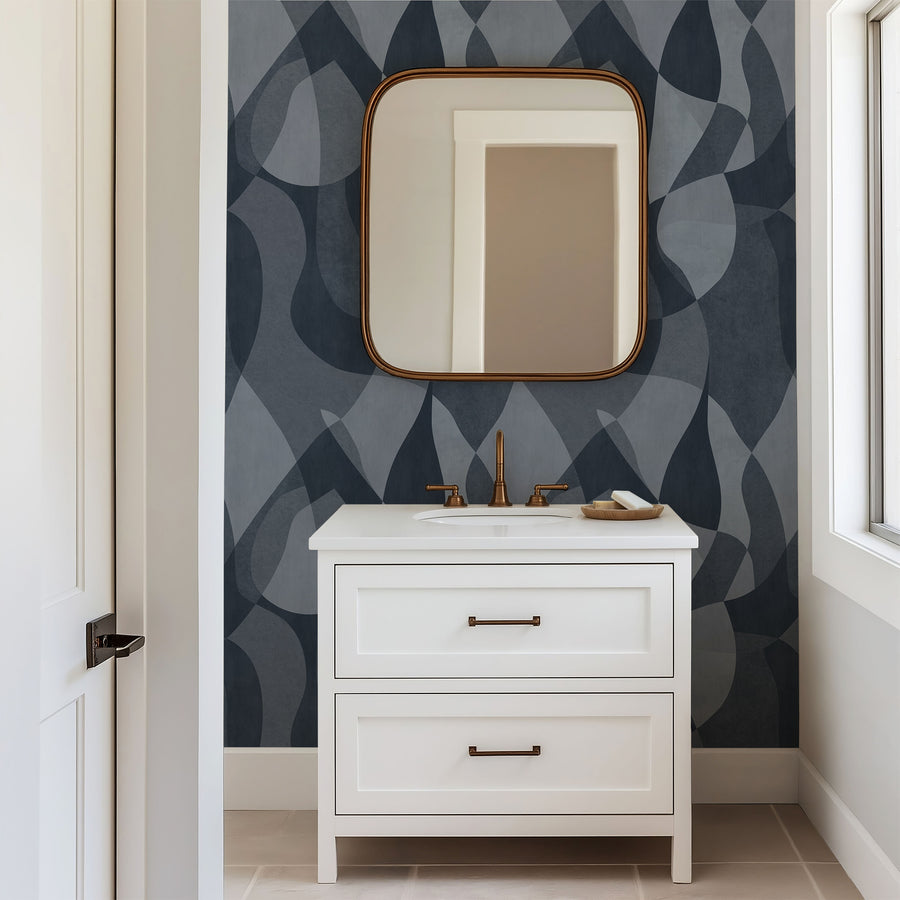
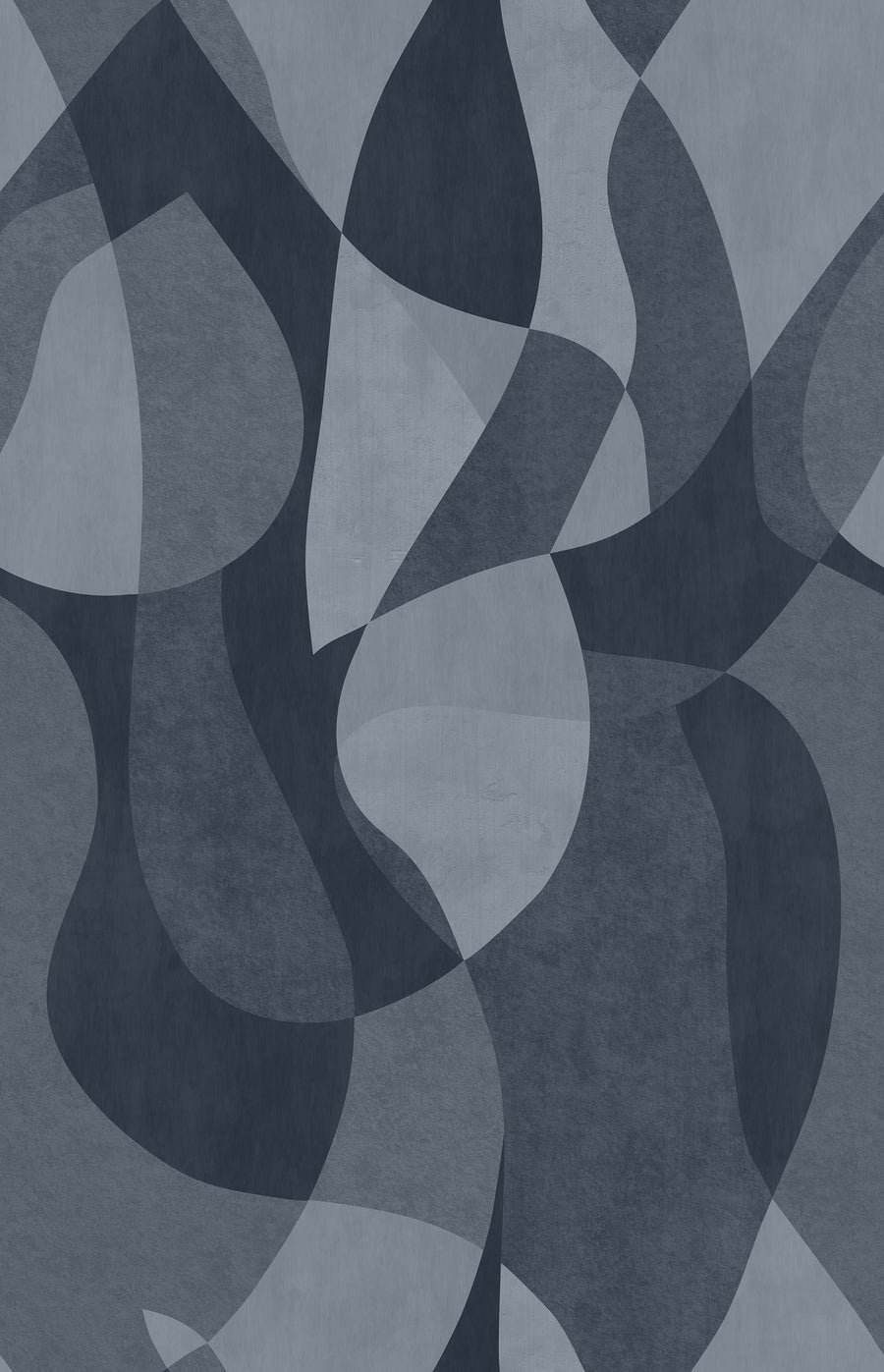
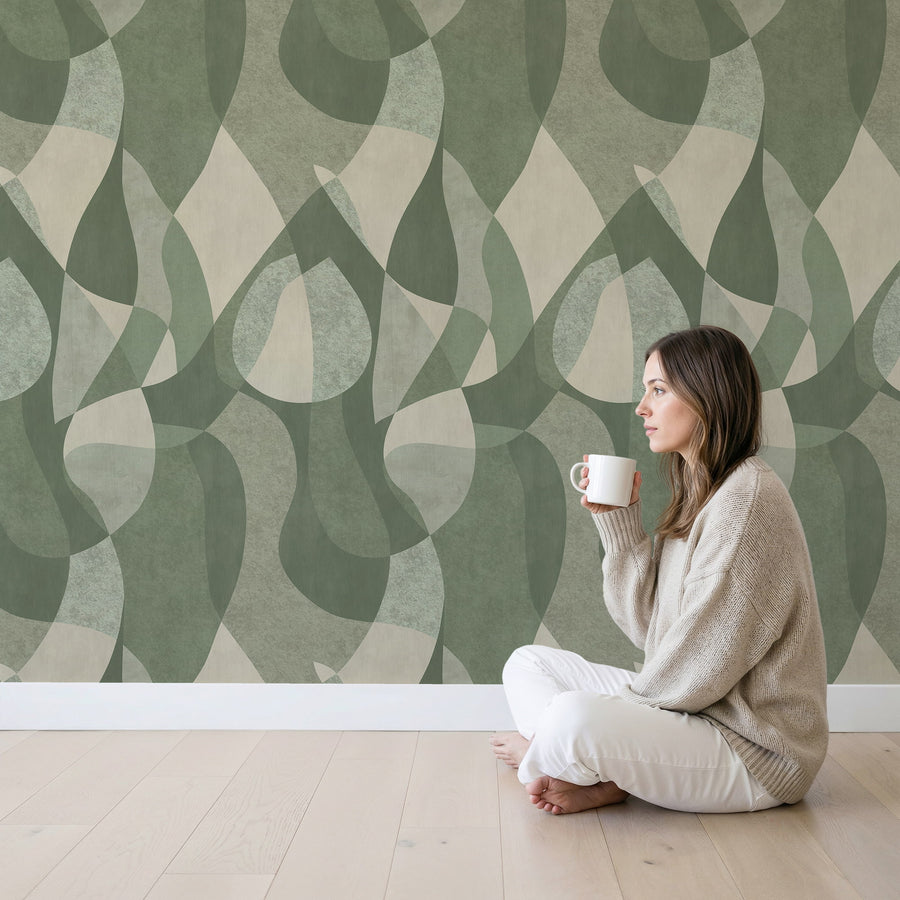
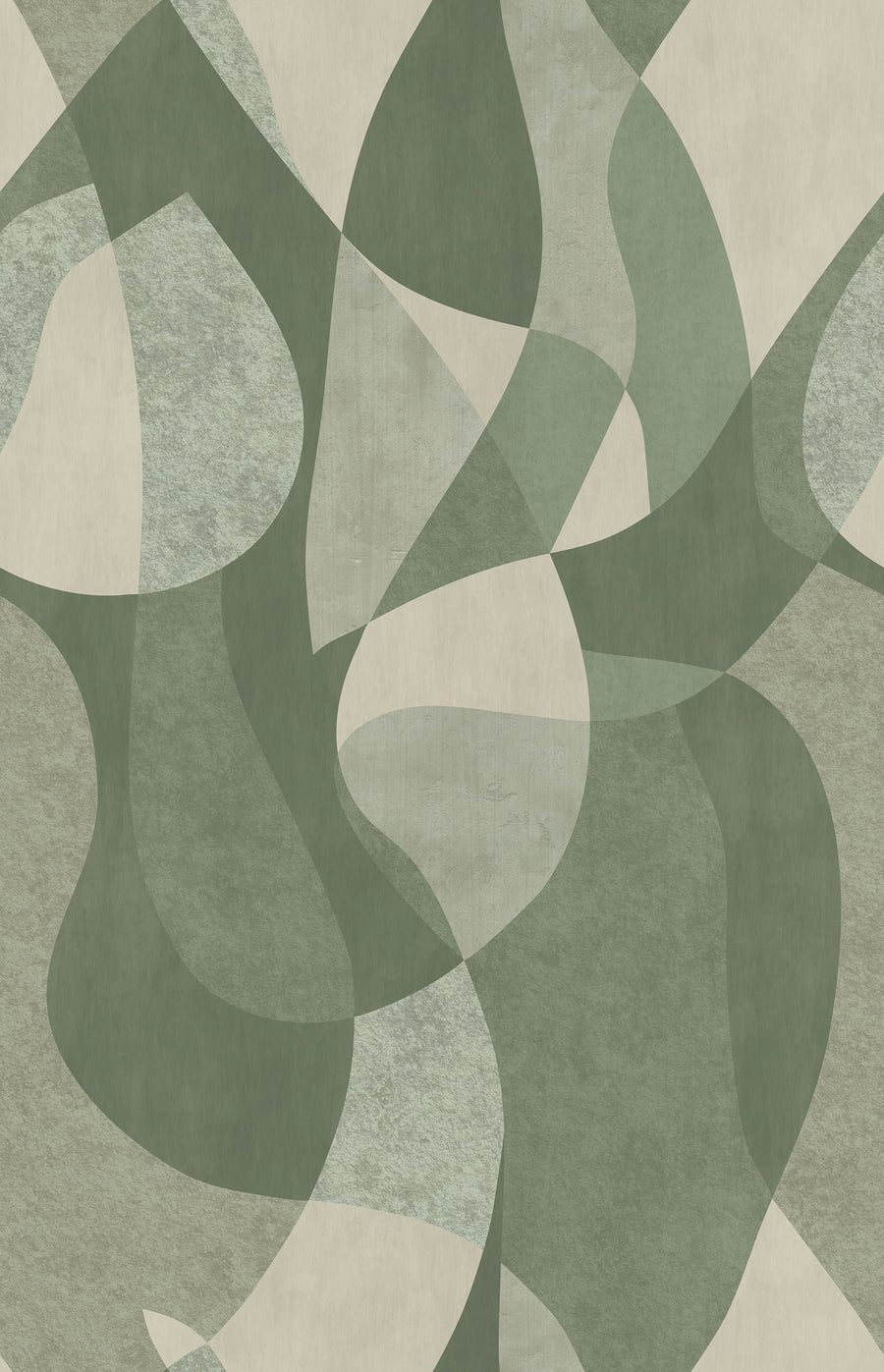
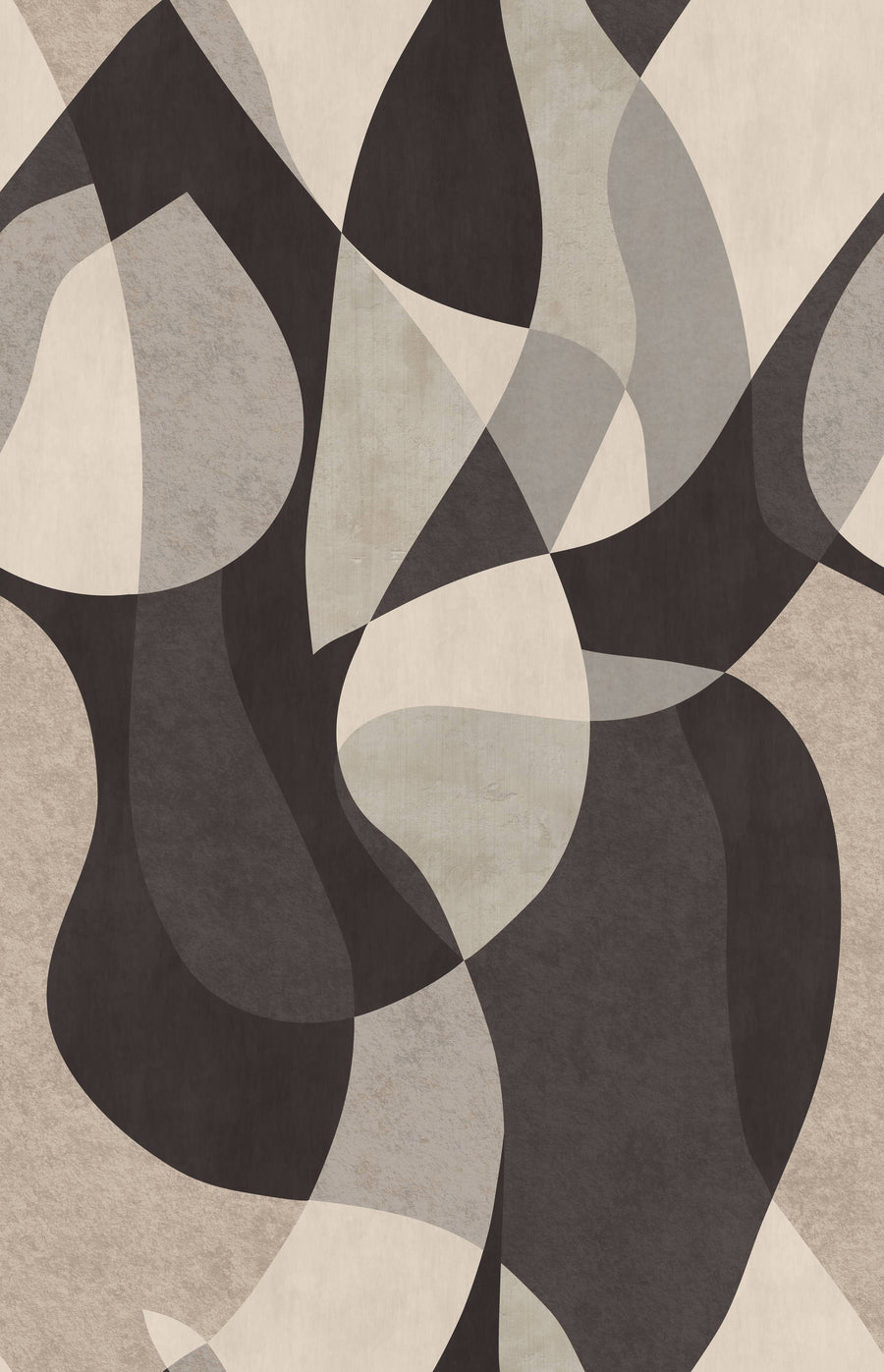
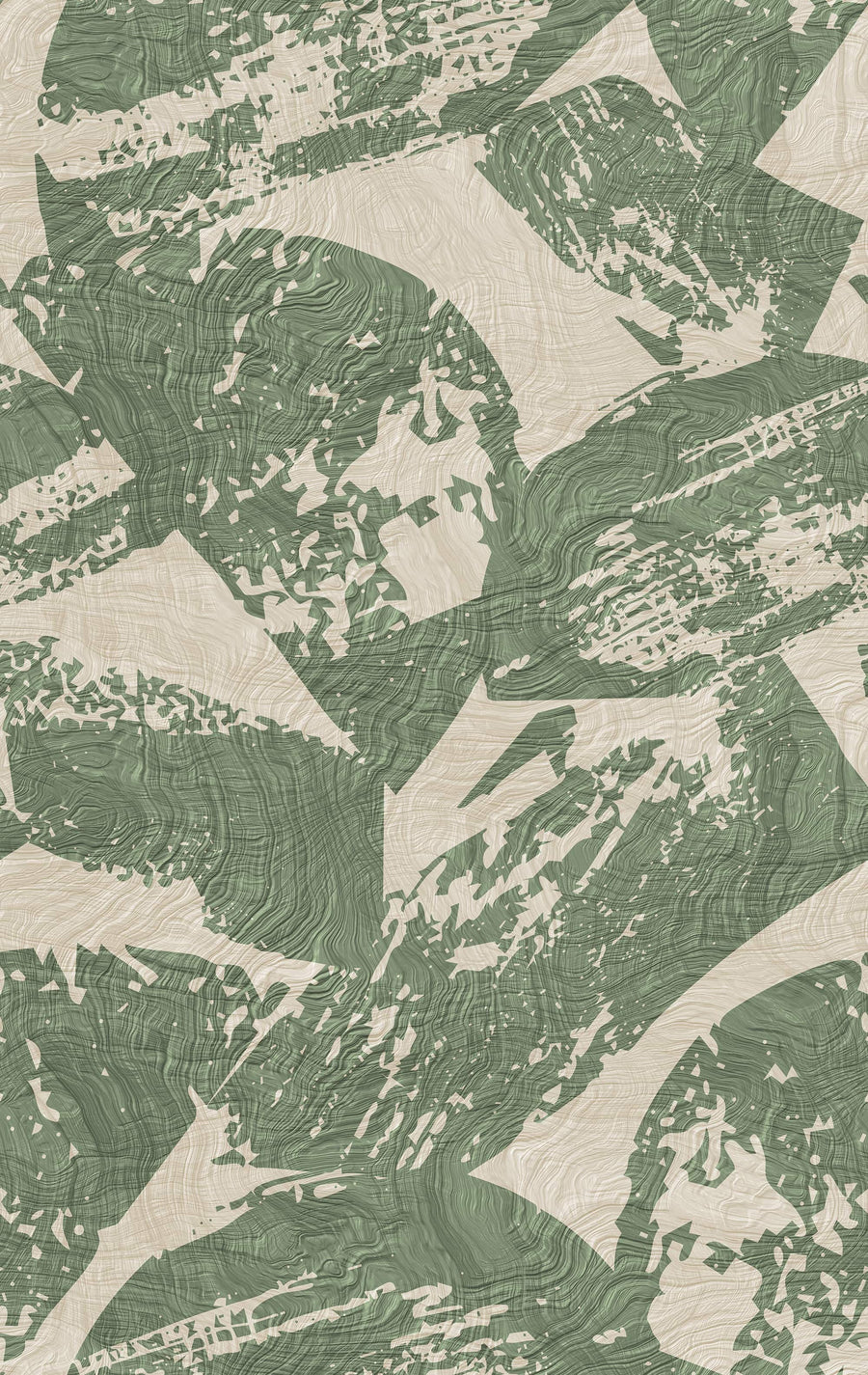
Organic Shapes. Irregular, soft-edged forms — pebble, kidney, and amoeba shapes, and flowing contour lines. These designs carry no straight edges or fixed grid, so the repeat is less obvious on the wall than in a geometric pattern. Related designs appear in our abstract wallpaper collection.
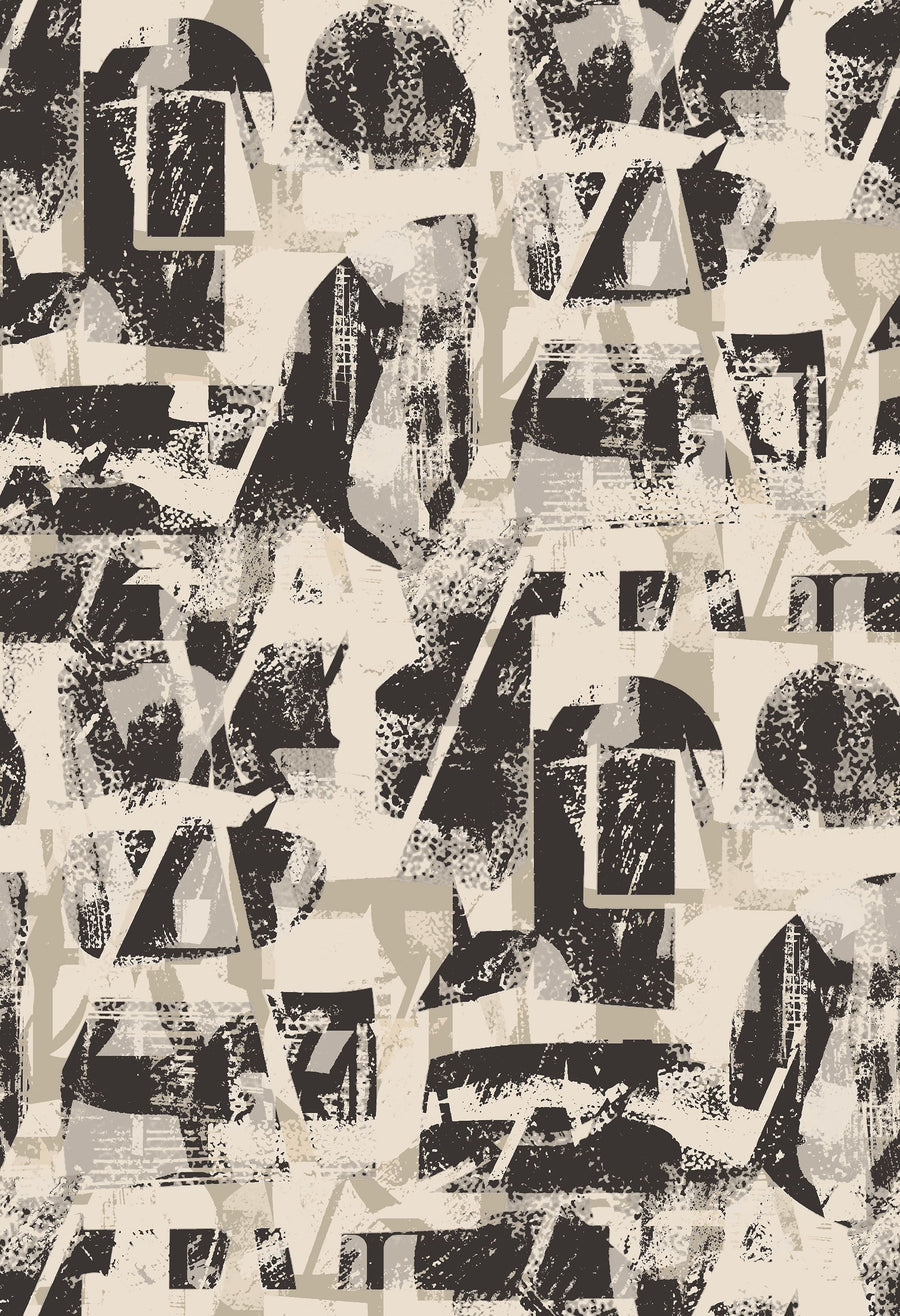
Geometric Repeats & Bauhaus Influence. Grids, circles, triangles, and blocked forms arranged on a regular repeat. Bauhaus is a separate movement — a German design school active from 1919 to 1933 — but its emphasis on primary forms and functional geometry carried into mid-century design through the designers who emigrated and taught in the United States. Patterns in this family show that lineage. See the wider geometric wallpaper range for designs beyond the mid-century period.
Where Mid-Century Modern Wallpaper Works Best
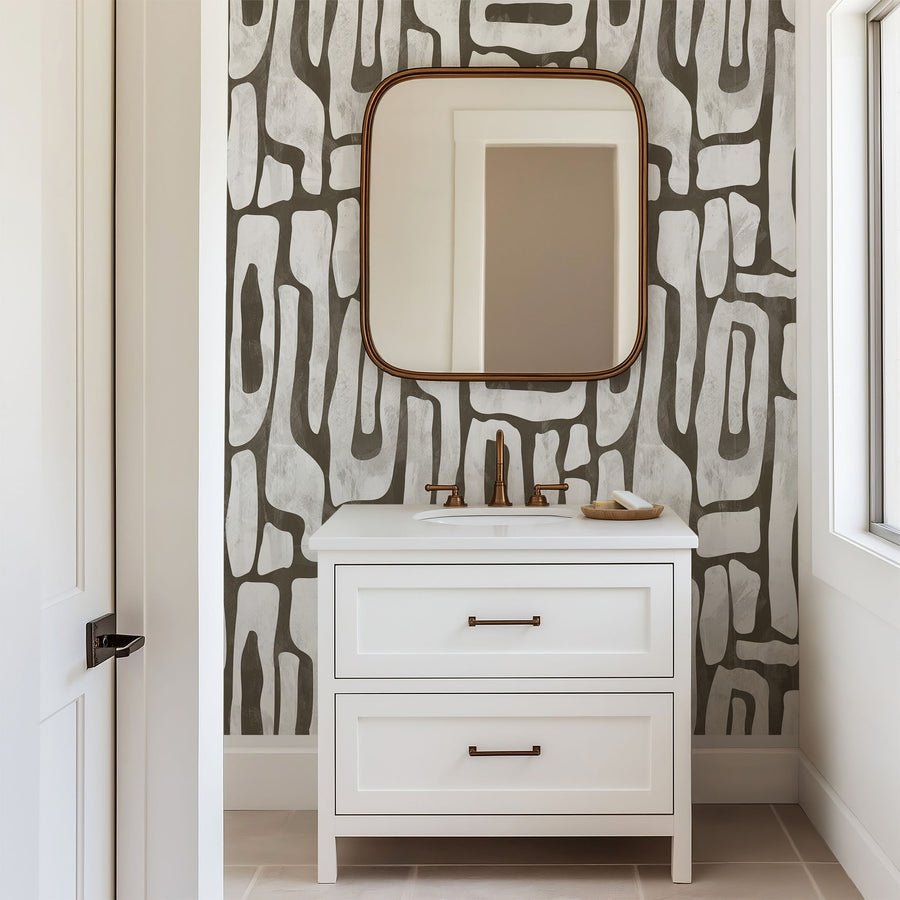
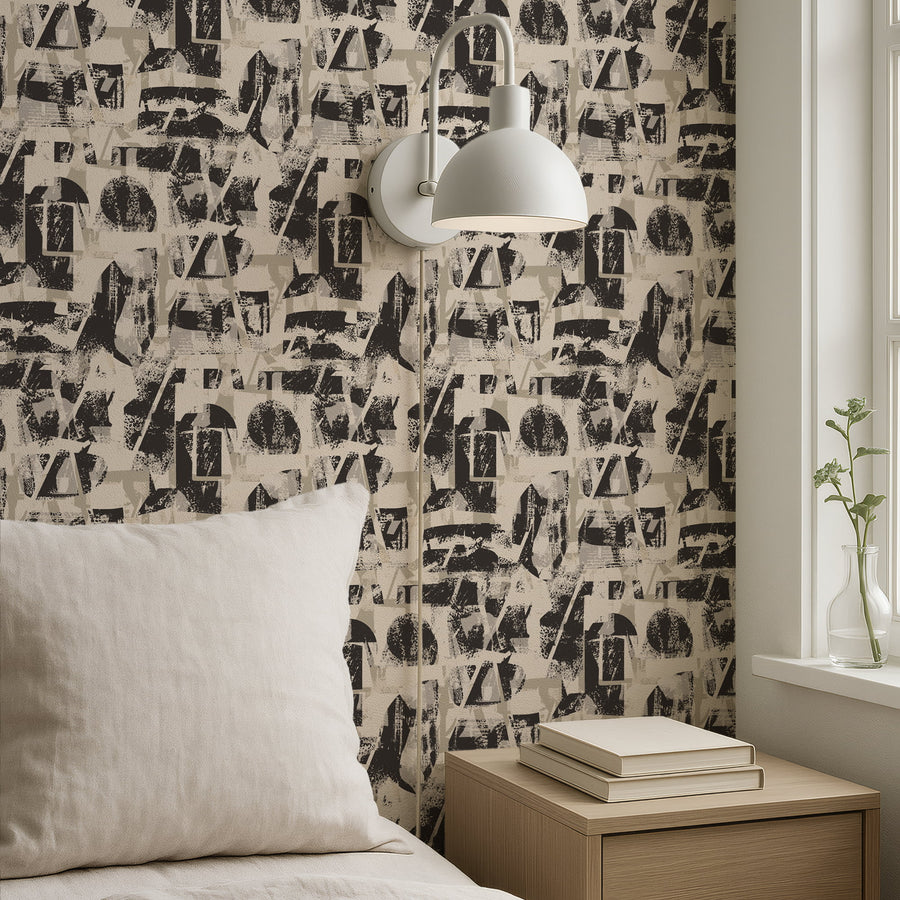
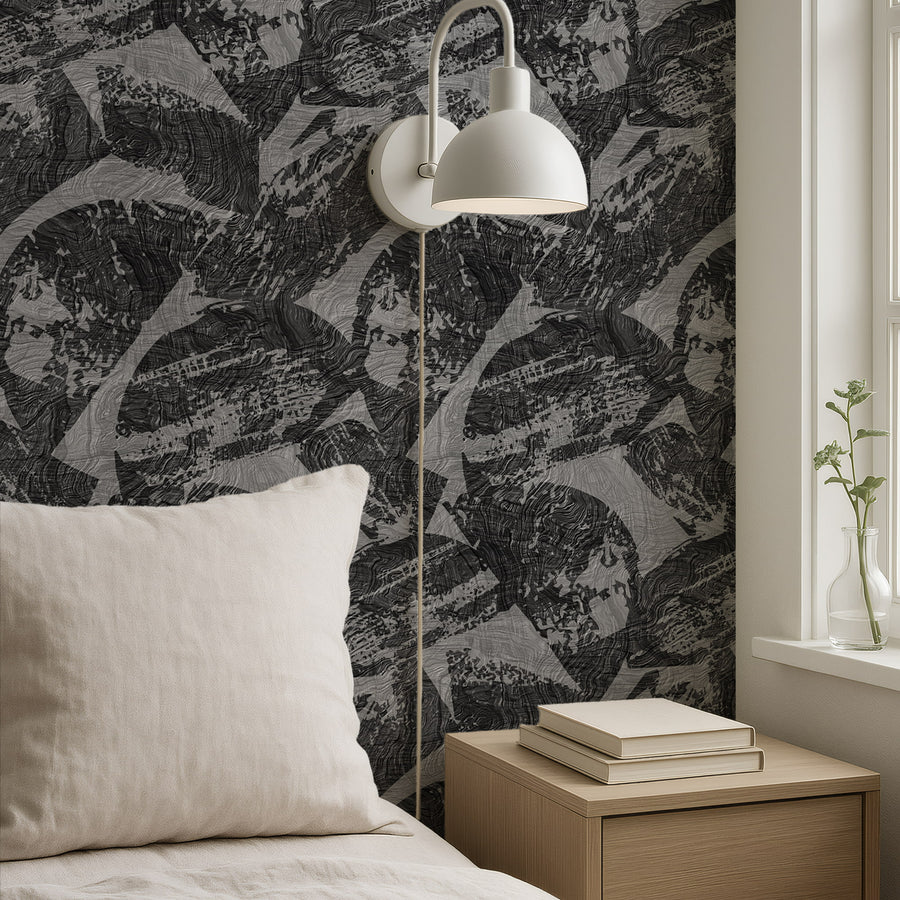
These designs work particularly well in living rooms, dining rooms, bedrooms, home offices, entryways, hallways, and powder rooms. In larger rooms, a single papered wall behind a sofa, bed, or desk gives the pattern a defined boundary. In smaller spaces such as powder rooms and entries, the pattern is read at close range and across the full surface, which suits designs with a visible repeat structure.
On furnishings: walnut and teak, brass hardware and lighting, leather upholstery, and tapered-leg furniture are the period-correct pairings, and they share the warm tonal range found in most mid-century palettes. Contemporary furnishings work equally well — pairing a period pattern with plain modern pieces keeps the room from reading as a full period reconstruction. Drawing two or three colors from the wallpaper for textiles and accessories ties the scheme together.
Peel & Stick or Traditional Mid-Century Wallpaper
Every design here is available in more than one material. The choice comes down to your wall surface, how permanent the installation is, and where it is going.
Wall surface. Peel and stick requires a smooth, clean, fully cured painted wall. It will not adhere reliably to textured, unpainted, or recently painted surfaces — EazzyWalls recommends waiting at least 30 days after painting before installing. Paste-installed Traditional Type II tolerates light wall texture, so it is the option when the wall is not perfectly smooth.
Permanence and rentals. Peel and stick is removable and repositionable during installation, and lifts away without residue on properly painted, fully cured walls — which is why it suits rentals and rooms you expect to change. Traditional Type II is a permanent installation, removed with steam or stripping rather than by peeling.
Finish. Smooth Vinyl Peel & Stick has a semi-gloss surface that reflects light and wipes clean. Canvas Peel & Stick has a matte, lightly woven texture with no glare. Faux Grasscloth Type II adds a visible woven texture. On geometric and high-contrast mid-century patterns, the matte options reduce reflections across large papered areas.
Commercial use. Traditional Type II is commercial-grade and Class A/Class 1 fire rated (ASTM E84), which is the specification typically required for offices, hotels, restaurants, and other public interiors.
Why Choose EazzyWalls Mid-Century Wallpaper
The collection brings together designs influenced by mid-century geometry, atomic motifs, organic forms, and retro color palettes. For the broader vintage range, including 1970s and groovy prints, see our retro wallpaper collection.
- Made to order in Davie, Florida. Every order is printed after it is placed, not pulled from stock.
- Four standard material options. Smooth Vinyl Peel & Stick, Canvas Peel & Stick, Traditional Type II, and Faux Grasscloth Type II — the same design is available across all of them.
- GREENGUARD Gold certified inks. Printed with water-based resin inks and GREENGUARD Gold certified inks, which meet stringent standards for low chemical emissions in indoor environments.
- Custom sizing. Rolls are printed to your exact wall dimensions, which reduces seams and waste.
- Samples for every design. Order a sample to check color and scale on your own wall and under your own lighting before committing to full panels.
- Production and shipping. Standard production time is 5–7 business days, with free shipping within the United States.