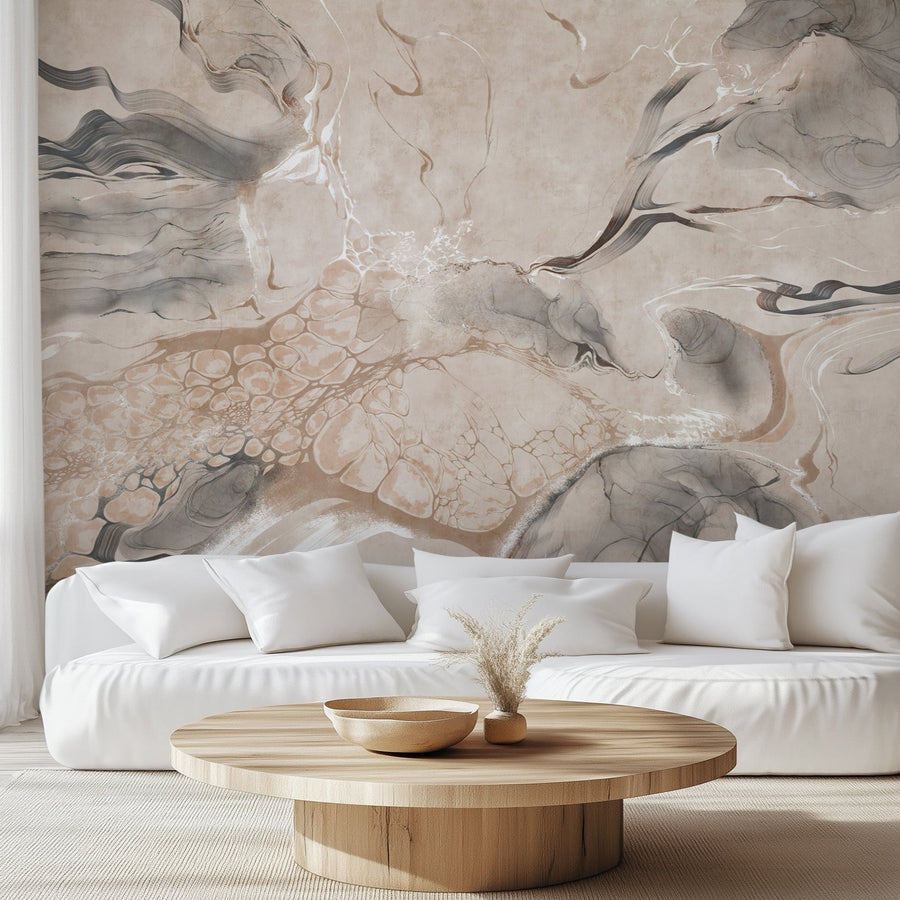
Chinoiserie wallpaper is a decorative, highly detailed wallcovering inspired by European interpretations of East Asian art, primarily Chinese. It typically features asymmetrical, hand-painted-style motifs - sprawling blossom branches, exotic birds, butterflies, and tranquil garden or lifestyle scenes - often arranged as a continuous mural rather than a repeating pattern. First popularized in 17th-century Europe, chinoiserie remains one of the most enduring and sought-after wallpaper styles in interior design today.
As a wallcovering manufacturer, we produce chinoiserie designs in-house every week, so this guide goes beyond the surface. Below we cover what chinoiserie wallpaper actually is, how to pronounce it, its history and defining motifs, how modern versions are made, whether it's still in style, and exactly how to decorate with it - the way only an expert who produces these scenes can explain.
Design Insight
The single trait that sets true chinoiserie apart from other florals is composition. A standard floral wallpaper repeats a tile across the wall; a chinoiserie is built as a mural scene - a branch climbs from the baseboard, a bird lands mid-wall, blossoms scatter toward the ceiling - so the eye reads it as one continuous painting. That's why it feels like art rather than pattern.
Table of Contents
What Is Chinoiserie Wallpaper?
Chinoiserie wallpaper is a decorative wallcovering that reinterprets the imagery of East Asian art - blossoming trees, cranes and songbirds, pavilions, and garden vistas - through a European decorative lens. The word itself is the giveaway: it comes from the French chinois, meaning "Chinese," and describes a Western style inspired by Asian art rather than a direct reproduction of it.
A few characteristics define the genre:
- Scenic, not repetitive. Unlike a standard floral or geometric print, a true chinoiserie design often spans a set of continuous panels, so each panel is unique and the wall reads as a seamless, non-repeating mural.
- Asymmetrical, painterly motifs. Branches wander, birds perch at irregular heights, and blossoms cluster off-center — the deliberate imbalance is what gives chinoiserie its hand-painted feeling.
- Signature palettes. The classic is blue-and-white porcelain; close behind are soft celadon and green-and-cream grounds, warm blush and gold, and dramatic dark navy or black backgrounds.
You'll find the full spectrum in our Modern Chinoiserie Wallpaper & Scenic Murals collection, which ranges from traditional blue-and-white scenes to contemporary, abstract takes on the style.
How Do You Pronounce Chinoiserie?
It's the question almost everyone has and few say out loud. Chinoiserie is pronounced "shin-WAH-zuh-ree" (roughly sheen-wah-zuh-ree), with the stress on the second syllable. The word keeps its French shape in English because it arrived with the style itself in the 18th century. American and British speakers land in nearly the same place, so there's no wrong way to say it in a design conversation - and now you can order it with confidence.
The History and Origins of Chinoiserie Wallpaper
Chinoiserie emerged in the mid-17th century, when expanding trade between Europe and East Asia brought porcelain, lacquerware, silk, and hand-painted panels westward for the first time. To own something from the Far East signaled wealth and worldliness, and European aristocrats grew fascinated with these "exotic" imports. Demand quickly outpaced supply, so European craftsmen began creating their own interpretations - and chinoiserie was born.
The style reached its height in the palaces of monarchs: Louis XV of France favored it because it paired so naturally with the rococo taste of the era, and it appeared throughout the great houses of France and England. When the first wallpaper printing machine was invented in France in the late 1700s, more affordable versions reached the middle class, and chinoiserie wallpaper moved from palace walls into ordinary homes - where it has stayed, in one form or another, ever since.
Expert Take
It's worth naming honestly: chinoiserie wallpaper is a European interpretation of Chinese art, not Chinese art itself, and historically it romanticized a culture it didn't fully understand. We think the style is best appreciated with that context in view - celebrating the genuine craftsmanship and centuries of artistry it draws on, while recognizing where it came from. Good design can hold both.
Common Motifs and What They Mean
Part of what makes chinoiserie so rich is that its imagery carries meaning. Recognizing the motifs helps you choose a design that fits both your room and the mood you want:
- Blossoming branches (cherry, plum, magnolia) — renewal, spring, and the passage of time; the backbone of most chinoiserie scenes.
- Birds — cranes symbolize longevity and good fortune, while pairs of songbirds suggest harmony and companionship.
- Butterflies — joy, transformation, and lightness of spirit.
- Pavilions and pagodas — borrowed from temple architecture, these lend a sense of place and storytelling.
- Garden and lifestyle scenes — idealized landscapes that turn a wall into a window onto another world.
Because these elements are arranged as a composition rather than a tile, chinoiserie wallpaper reads less like decoration and more like a scroll painting stretched across your wall — which is exactly its appeal.
How Chinoiserie Wallpaper Is Made Today
Historically — and still, at the very top of the luxury market — chinoiserie was meticulously hand-painted on paper or silk, sometimes accented with gold leaf. Those bespoke panels remain extraordinary, and extraordinarily expensive, often running into the hundreds of dollars per square foot with long lead times.
The modern revolution is that you no longer need a palace budget to get the look. We produce chinoiserie wallpaper on demand, reproducing the depth and brushwork of original artwork with high-resolution printing on durable, modern materials:
- Peel and stick — removable and renter-friendly, ideal for a feature wall you may want to change later.
- Traditional Type II — commercial-grade, paste-installed wallcovering, built for high-traffic and long-term installations.
- Faux grasscloth — a woven-texture Type II material that adds a subtle, organic depth beneath the scene, echoing the silk grounds of antique chinoiserie.
For collectors and designers who want the pinnacle of the craft, our Hand Painted Chinoiserie Wallpaper by Maja Pitschmann collection captures original hand-painted artistry — the true heirloom tier — while our Modern Chinoiserie & Scenic Murals collection makes the broader style accessible across every material and budget.


Expert Take
Because chinoiserie wallpaper is a scene rather than a repeat, it's the one style where custom sizing matters most. When we produce a mural, we scale the artwork to your exact wall so the composition lands correctly — the main branch anchored where you want the eye to go, key blossoms clear of furniture and outlets. A repeat pattern forgives rough measuring; a scenic mural rewards precise ones. Always send us real wall dimensions.
Is Chinoiserie Wallpaper Still in Style?
Yes - emphatically. Chinoiserie has been in continuous production for more than 300 years, which makes it one of the most enduring decorative styles in existence, and it remains a leading wallpaper category. Its staying power comes from a rare quality: it's highly complementary and easy to live with. Unlike trend-driven patterns that clash with existing furnishings, chinoiserie's soft palettes and natural motifs pair effortlessly with antique wood, brass, rattan, and modern minimalism alike.
What's new is range. The style now spans traditional blue-and-white scenes, moody dark-ground dramatics, and stripped-back modern and abstract interpretations, so it slots into classic, transitional, and contemporary interiors with equal ease. If you're weighing whether it will date, history has already answered: three centuries and counting.


How to Decorate With Chinoiserie Wallpaper
Chinoiserie earns its keep as a focal point. Here's how we'd guide you to use it well:
- Start with a feature wall. Dining rooms, primary bedrooms (behind the headboard), powder rooms, and entryways are the classic choices — spaces where a single dramatic wall sets the tone for the room.
- Let the palette lead the room. A blue-and-white scene calls for crisp whites and natural wood; a dark navy or emerald ground wants warm metallics and soft lighting to glow. For related tones, browse our floral wallpaper and wallpaper murals collections alongside your chinoiserie pick.
- Mind the furniture line. Because the design is a scene, plan where the main motifs sit relative to your bed, console, or vanity so the artwork isn't hidden behind them.
- Go bold in small rooms. A powder room is the perfect place to be fearless — the enclosed space turns a lavish chinoiserie mural into a jewel-box moment.


Whether you want a faithful traditional scene or a fresh modern take, chinoiserie gives you a wall that feels collected, artful, and timeless — the look of a hand-painted heirloom, produced to fit your space and your budget.